

The rhythm of the day was set not by the usual cacophony of Beirut traffic, but by the stomp of feet and the beat of drums. For a few hours on Sunday, the heavy, humid air of Lebanon—so often thick with anxiety—carried the sound of folkloric dabke music.
Pope Leo XIV, the 267th pontiff, had arrived. But the story wasn’t just in the motorcade or the official handshakes; it was in the faces of the crowd that lined the streets.
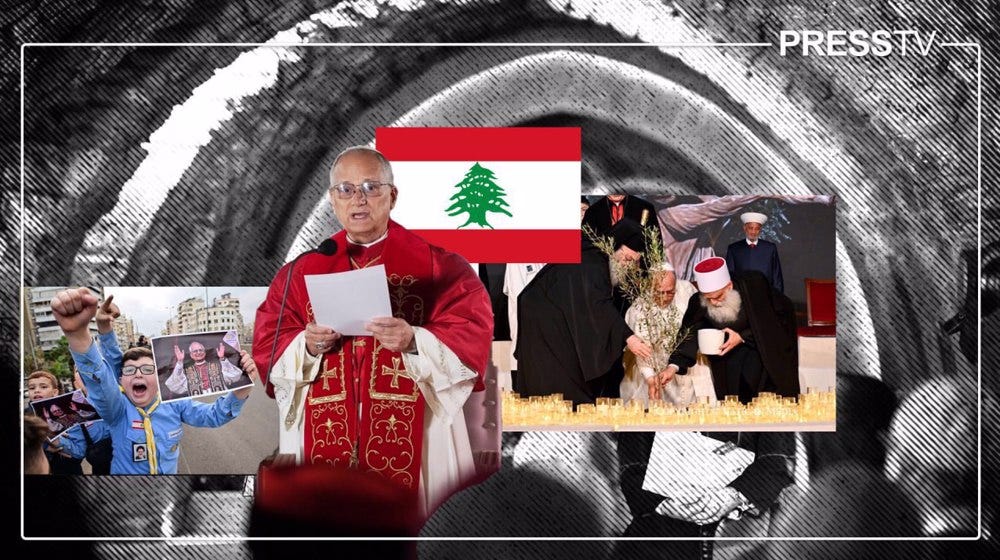
In a country where sectarian lines are often drawn in blood, a striking tableau unfolded. The reception was not merely a Christian affair. The streets were filled with Muslims, particularly from the Shiite community, standing shoulder to shoulder with their Maronite neighbors. Members of the Al-Mahdi and Al-Risalah Scouts—affiliated with Hezbollah and the Amal movement—stood in disciplined rows, not as political enforcers, but as a welcoming guard, applauding with a sincerity that seemed to catch even the cynics off guard.
The City of Paradoxes To the casual observer, Beirut looked reborn. Streetlights that had been dark for years suddenly hummed with electricity. Potholes that once swallowed tires were smoothed over with fresh asphalt. It was a “Potemkin” polish—a beautification for the guest of honor that left locals with a bitter-sweet aftertaste.
“How beautiful it is to see the country illuminated,” one bystander mused, watching the convoy pass, “and how heartbreaking that it shines first for someone other than its own people.”
Yet, as the Pope’s convoy cut through the crowd, that bitterness momentarily receded. People wept without knowing why. Perhaps it was simply the relief of being seen. For a nation that has spent the last two years enduring relentless bombardment and economic collapse, the visit felt like a window opening in a stifling room.
A Pilgrimage of Symbols The Pontiff’s itinerary was a tapestry of Lebanon’s spiritual heritage. He prayed at the tomb of Saint Charbel in Annaya, met with diverse religious leaders in the shadow of the Harissa shrine, and planted an olive tree in Martyrs’ Square—a living promise of peace in a square named for sacrifice.
His journey ended in solemn silence at the Port of Beirut, the site of the catastrophic 2020 explosion, before a final mass on the waterfront.
However, the visit was also defined by where he didn’t go. The Pope did not travel to the southern suburbs or the villages of the South—areas shattered by recent Israeli aggression. The security constraints were too high, the geopolitical walls too thick. To the people of the South, this absence was a “subtle ache,” a reminder that even a man of peace is bound by the harsh realities of war.
The Unlikely Unity Despite the missing stops, the visit achieved something rare: it shattered a stereotype. The Shiite community, often painted by external observers as insular or hostile, offered a welcome that was open-hearted and reverent. In their applause, the rumors of division were drowned out, replaced by a visual manifesto of national identity.
For a brief Sunday, Lebanon was not a collection of warring sects, but a single, weary body seeking a moment of rest. As the Pope departed, he left behind no miracles to fix the economy or the roads that would likely darken again tomorrow. But he left a memory—a reminder that beneath the rubble and the politics, the capacity for unity remains, waiting for the light to find it.
Reference: PressTv