

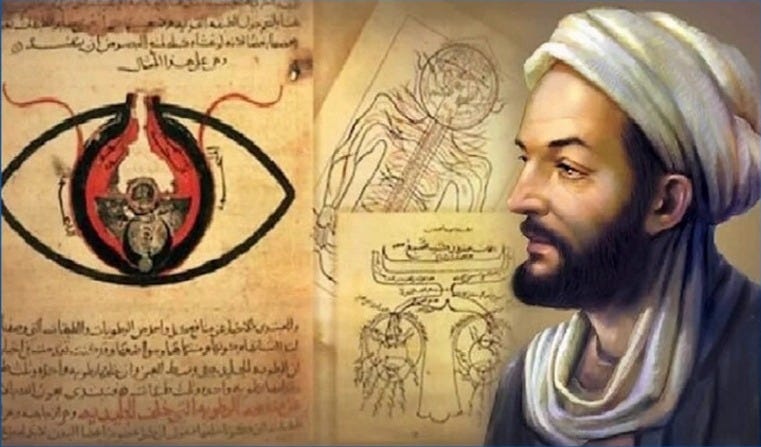
When the West speaks of Ibn Sina (known in the Latin world as Avicenna), they often picture a pioneer of medicine or a brilliant logician who helped spark the European Renaissance. Yet, what often gets lost in these secularised biographies is a fundamental truth: Ibn Sina did not view his intellectual pursuits as separate from his Islamic faith. He was not merely studying Aristotle; he was propagating Islamic philosophy.
For Islamic Digest, we revisit the legacy of this titan of the Golden Age to understand how modern scholarship is finally reclaiming Ibn Sina from the narrow confines of Western reductionism.
Logic in Service of Kalam
For Ibn Sina, the “foreign” inheritance of Greek philosophy was not a rival system to Islam, but a toolkit. Following in the footsteps of earlier Muslim intellectual giants like Al-Kindi and Al-Farabi, Ibn Sina used the logical frameworks of late antiquity to tackle questions that Islamic theology (kalam) had been debating for two centuries.
His metaphysics, at its core, is a profound argument for the “Necessary Existent” (Wajib al-Wujud). Far from being a purely secular philosophical exercise, this concept was a philosophical proof of God structured specifically for an Islamic theological vocabulary. He sought to rationally explore the nature of God’s absolute existence, the relationship between the eternal Creator and the created universe, and the fate of the soul after death. His overarching concept of hikmah (wisdom) was firmly rooted in an Islamic epistemological framework.
The Mystery of “Eastern Wisdom”
Towards the twilight of his illustrious career, Ibn Sina hinted at a project he called al-hikmah al-mashriqiyyah, or “Eastern Wisdom.” He suggested this body of work went beyond the standard peripatetic philosophy he was famous for.
Tragically, much of the writing describing this “Eastern Wisdom” has been lost to history. What remains are a handful of fragments that have sparked a massive scholarly debate. Was it a more intuitive, spiritually rooted form of knowledge, or simply his existing logic presented in a new light?
The European Filter
What is undisputed, however, is that this “Eastern Wisdom” never reached Latin Europe. During the 12th and 13th centuries, European translators—largely operating out of the Toledo School in Spain—selectively translated Ibn Sina’s corpus. They absorbed his logic, his medical masterpieces like The Canon of Medicine, and his metaphysical proof of the “Necessary Existent.” These elements fit comfortably into the Christian scholastic curriculum of the time.
Whatever Ibn Sina meant by “Eastern Wisdom,” it was left behind. European translators effectively cherry-picked the portions of his work that could function independently of the Islamic theological framework he had built them within. This gave birth to “Latin Avicennism”—a truncated version of the man that Europe celebrated—while the broader, deeply Islamic reception of his work continued to evolve and flourish in the Muslim world for centuries.
Decoding the Legacy
This historical truncation has led to intense debates among modern scholars regarding the true nature of Ibn Sina’s later work.
Sayyed Hossein Nasr, a leading contemporary scholar of Islamic philosophy, argues that Ibn Sina’s “Eastern Wisdom” contains a genuine mystical and illuminationist dimension. Nasr traces this spiritual depth directly to the Islamic mystical tradition (Sufism) and argues that it laid the groundwork for later luminaries like Shihab al-Din Suhrawardi. In Nasr’s view, dismissing this side of Ibn Sina erases a profoundly Islamic part of his thought—one that Western academia has historically struggled to reckon with because it favours spirituality over pure secular logic.
Dimitri Gutas, a prominent scholar of Arabic and Islamic Studies, takes the opposing view. He argues that the “Eastern Wisdom” was merely an advanced restatement of his rational philosophy, suggesting that 20th-century Western academics projected hidden spirituality onto the text due to their own Orientalist expectations of the “mystical East.”
Bridging these perspectives is the critical lens of the late Edward Said, whose foundational work on Orientalism highlights a broader trend: Western intellectual history has a habit of detaching Muslim thinkers like Ibn Sina from their specific religious and historical contexts, absorbing them into a generic, secularised “world philosophy” canon.
A Reclaimed Legacy
To truly honour Ibn Sina today is to reclaim him from the narrow confines of Western reductionism. He was not just a physician who happened to be Muslim, nor a Greek philosopher who happened to live in the East. He was a master of hikmah who seamlessly wove the rigorous logic of the ancients into the rich tapestry of Islamic theology and spirituality.
Reclaiming Ibn Sina means embracing his legacy in its totality—logic, medicine, faith, and “Eastern Wisdom” alike.
References: