

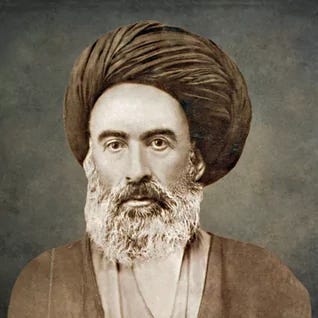
In an era increasingly defined by materialism and fleeting distractions, the lives of luminous scholars who balanced rigorous academic achievement with profound spiritual insight serve as vital beacons of guidance. Sayyid Muhammad Hasan Husayni, widely known as Aqa Najafi Quchani, was one such figure. A devout jurist, striving mystic, and self-disciplined scholar, his legacy extends far beyond his seminary teachings. Through his unique literary works, he provided a comprehensive roadmap for seekers of truth, illustrating the vital link between acquiring knowledge and embodying its spiritual fruits.
A Scholar Who Served the People
Born in 1295 AH in a village near Quchan, Iran, Aqa Najafi’s pursuit of sacred knowledge took him through the great centres of Islamic learning—from Isfahan to Najaf—where he studied under eminent masters like Akhund Khorasani. Yet, what truly set him apart was his decision to return to his hometown rather than seek fame in larger cities.
For Aqa Najafi, the value of seminary learning was never rooted in personal prestige, but in service. His life was characterised by three distinct pillars:
Unwavering Seriousness in Study: He endured the hardships of the scholarly path to attain the rank of ijtihad, proving that deep understanding requires perseverance.
Integration of Study and Self-Cultivation: He believed that religious knowledge can only truly guide others if it is visibly reflected in the scholar’s character. Humility, honesty, and pure intentions were non-negotiable.
Profound Responsibility to the Community: By returning to Quchan, he showed that a scholar’s greatest impact often lies in teaching local students, resolving community disputes, and patiently guiding the everyday affairs of the people.
Two Journeys, One Ultimate Goal
Aqa Najafi’s enduring influence is largely captured in his two most famous works: Journey to the East (Siyahat-i Sharq) and Journey to the West (Siyahat-i Gharb). Read together, they form a complete curriculum for the spiritual and intellectual development of a believer.
Journey to the East: The Struggle for Knowledge
This work is a remarkable autobiography that chronicles the author’s life, educational hardships, and the scholarly environments of his time. For modern readers, especially students of religion, it provides a raw, human look at the sacrifices required to attain sacred knowledge. It also serves as a reminder of the scholar’s duty to document their experiences, ensuring that the wisdom of one generation becomes a resource for the next.
Journey to the West: A Vision of the Hereafter
While the first book deals with the worldly pursuit of knowledge, Journey to the West (also known as The Destiny of Souls After Death) confronts the ultimate outcome of that pursuit. Written as an imaginative travelogue, it takes the reader on a fictional journey into Barzakh—the intermediate realm between death and the Day of Resurrection.
Rather than relying solely on dense theological arguments, Aqa Najafi uses a fluid, intimate narrative to bring the abstract realities of the afterlife to life. In this realm, human deeds take on physical forms: a lie manifests as a terrifying creature, while sincerity radiates with light. Accompanied by a spiritual guide representing love and allegiance to the Ahl al-Bayt (AS), the reader is forced to ask a sobering question: If my journey into the grave began today, what would I take with me?
Preparing for the Unseen: Practical Steps for Today
The true value of reading about the afterlife is not merely to induce fear, but to inspire immediate, positive action in our daily lives. Reflecting on the Quranic mandate to “consider what we have sent ahead for tomorrow” (Surah al-Hashr, Chapter 59, The Banishment, Verse 18), Aqa Najafi’s teachings encourage a practical program for self-reform:
Self-Accounting: Regularly auditing our intentions and actions. Are we careful with our words? Do we practice the ethics we preach to others?
Restoring Rights: True readiness for the hereafter involves tangible actions, such as paying debts, correcting falsehoods, and seeking forgiveness from those we have wronged.
Building Lasting Habits: Since the afterlife is intrinsically linked to our inner character, small, consistent acts of honesty, fairness, and mindful worship are of immense value.
Crucially, this reflection must be balanced with hope. While the Quran warns us of our responsibilities, it also assures us never to despair of God’s infinite mercy (Surah al-Zumar, Chapter 39, The Throngs, Verse 53).
A Legacy of Responsible Living
Aqa Najafi Quchani’s life and works remind us that true religious scholarship is not a passive accumulation of facts, but a dynamic force for moral refinement and social responsibility. Journey to the East teaches us the striving required to build our character, while Journey to the West reminds us of the eternal weight of our choices.
Ultimately, the greatest tribute to this remarkable scholar is not just in reading his books, but in applying their lessons. When a reader closes his book and decides to mend a broken relationship, repay a debt, or serve someone in need, the true legacy of Aqa Najafi Quchani continues to flourish.
Reference: The Islamic Centre of England