

We live in a world that places enormous attention on appearance — faces, clothes, bodies, photographs, likes and carefully filtered images. Entire industries are built on making us look better.
But a beautiful appearance tells us very little about a person’s character.
What a Beautiful Face Cannot Tell You
Someone may be strikingly attractive, and yet be:
• unkind;
• arrogant;
• selfish;
• dishonest;
• constantly critical of others;
• unable to appreciate another person’s effort;
• cruel to those who are weaker;
• disrespectful when nobody important is watching.
Another person may never attract attention for their appearance, yet possess:
• a generous heart;
• patience;
• humility;
• compassion;
• honesty;
• forgiveness;
• respect for others;
• a willingness to help without seeking recognition.
Which of the two is truly beautiful?
The Beauty Islam Asks Us to Cultivate
Islam does not despise outward beauty — Imam Ali (AS) even said a believer should present himself well to his brother just as he would for an honoured stranger. But the weight of its praise is placed elsewhere. Allah (SWT) says:
“...Indeed, the most noble of you in the sight of Allah is the most righteous of you.” — (Quran, Surah al-Hujuraat, Chapter 49, The Chambers, Verse 13)
Not the most attractive. Not the most admired. The most beautiful in taqwa and character.
Imam Ali (AS) states it with piercing clarity:
“The adornment of your inner selves is more beautiful than the adornment of the outer.” (Ghurar al-Ḥikam, no. 5503)
“External beauty lies in good looks; internal beauty lies in possessing a good heart.” (Imam Ali (AS), Ghurar al-Ḥikam)
And the Ahl al-Bayt (AS) measured greatness by this same standard. Imam al-Baqir (AS) said:
“The most perfect believers in faith are the best of them in character.”
Imam al-Sadiq (AS) described good character simply:
“Modesty, honourable speech, and meeting your brother with a cheerful face.”
The reward for such beauty is enormous. The Prophet (S) said:
“One who is good-natured will receive the reward of those who fast by day and pray by night.”
And Imam al-Sadiq (AS) said:
“Good character dissolves sins just as the sun dissolves snow.”
That is the beauty Islam asks us to cultivate.
But There Is Another Lesson
The message is not only: “Don’t judge people by their appearance.”
It also turns a question back upon ourselves:
“What kind of heart am I developing?”
It is easy to spend hours improving how we look while giving minutes to how we are. We ask, “Do I look good?” — but Islam asks us to ask:
“Am I becoming good?”
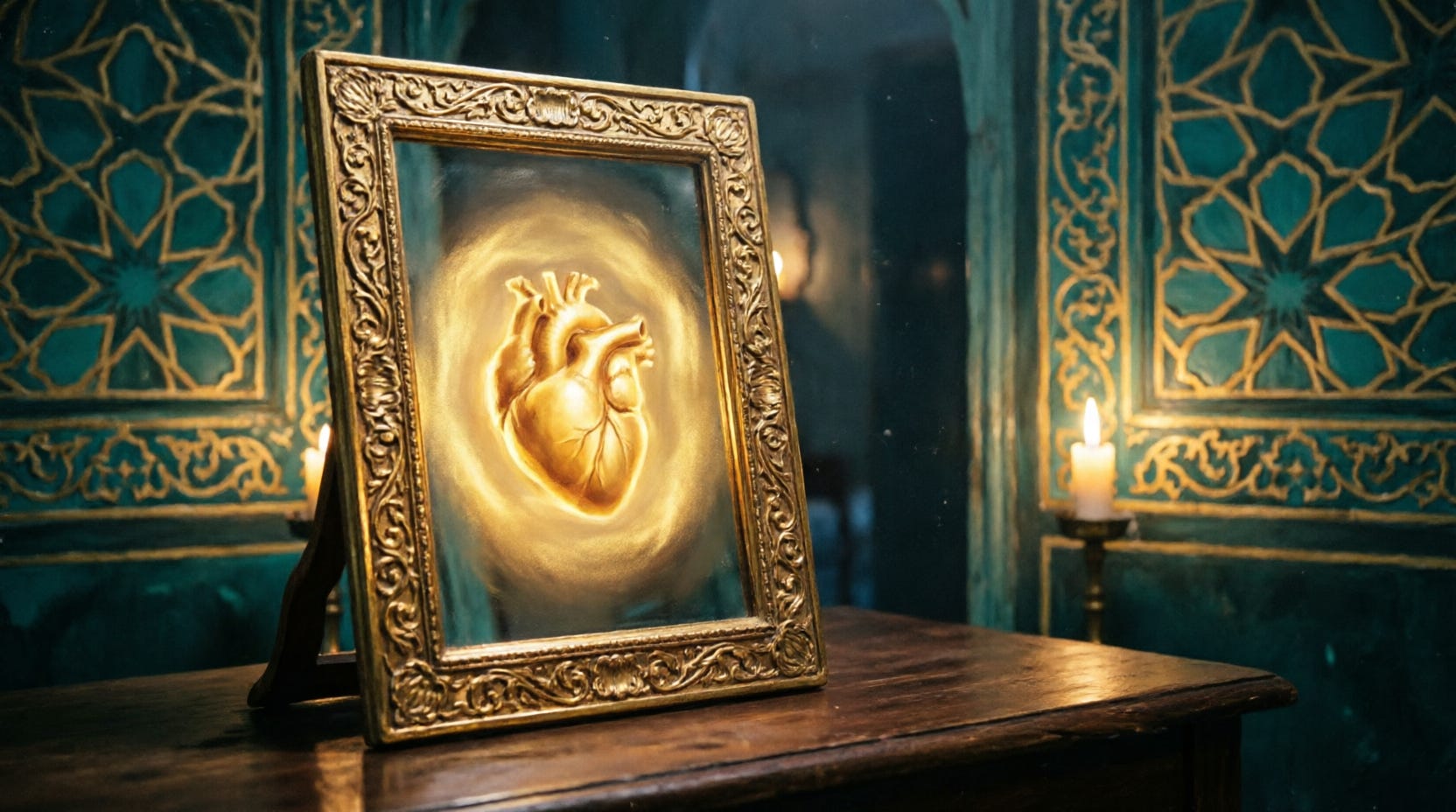
We look in the mirror and notice our face, our hair, our clothes. But we need a second kind of mirror:
“What does my behaviour reveal about my heart?”
How we speak to those who can do nothing for us. How we act when nobody important is watching. How we treat the weak. That is the mirror of the heart — and it is the mirror Allah looks at. As He reminds us:
“He has certainly succeeded who purifies it [the soul].”
— (Quran, Surah ash-Shams, Chapter 91, The Sun, Verse 9)
Spend Some of It Making Yourself 𝐺𝑜𝑜𝑑
Don’t spend all your energy making yourself look good. Spend some of it making yourself good.
Because faces change with age.
Clothes wear out.
Beauty fades.
But the character we develop becomes increasingly part of who we are. Imam Ali (AS) said:
“No one adorns himself with an adornment better than obedience to Allah.” (Ghurar al-Ḥikam, no. 9489)
And perhaps the lesson can be summed up simply:
Character is a kind of beauty that grows with us.
Take care of your appearance — but take even greater care of your heart. People may first notice your face, but they will remember how your character made them feel.