

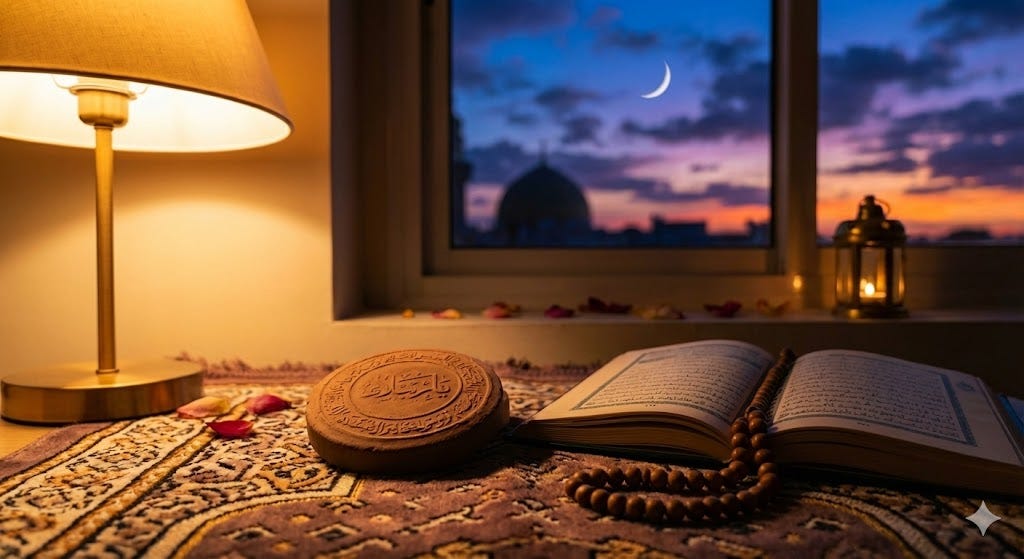
Introduction: The “Feng Shui” of the Spirit
In our daily lives, we understand that timing and environment matter. You wouldn’t plant seeds in the middle of winter, and you wouldn’t try to study for an exam in a noisy nightclub. We naturally seek the right conditions to succeed.
Islamic spirituality teaches that this same principle applies to our inner selves. If we want to grow morally, find peace, or break bad habits, we can’t just rely on willpower alone. We need to leverage the “physics” of the spiritual world.
The Quran and the teachings of the Ahl al-Bayt (the family of the Prophet Muhammad) reveal that the universe has “hotspots”—specific times and places where the walls between us and the Divine are thinner, making it easier to heal and improve the soul.
The Power of “When”: Rhythms of Renewal
Just as the body has a circadian rhythm (sleep and wakefulness), the soul has a spiritual rhythm. If we align ourselves with it, growth becomes natural.
The Daily & Weekly Reset
The Early Morning Silence: The Quran speaks highly of those who reflect in the quiet hours before dawn. Before the noise of emails and traffic begins, the mind is clear. It is the perfect time to set your “moral compass” for the day.
Thursday Night (The Weekly Detox): In the Shi’i tradition, the night before Friday is a time to “take out the trash” of the week’s stress and mistakes. There is a famous meditation called Dua Kumayl, taught by Imam Ali, which guides us to admit our flaws—not to feel guilty, but to free ourselves from them. It allows us to start the new week with a clean slate.
The “Season of the Soul” (The Three Holy Months)
Just as nature has Spring to renew the earth, the soul has a special three-month season for renewal. This occurs annually in the Islamic lunar calendar. The Prophet Muhammad described this progression beautifully using a farming analogy:
Month 1: Rajab (The Planting): This is the month of “Spring Cleaning.” It is known as the Month of God. It is a time to wash away bad habits and ask for forgiveness. Tradition says that in Rajab, mercy is “poured” over us like rain to clean the soil of our hearts so we can plant good seeds.
Month 2: Sha’ban (The Watering): This is the Month of the Prophet. It acts as a bridge. We use this time to strengthen our connection to the Prophet and his family (the guides). It is a time of “watering” the good seeds we planted, building up our spiritual stamina.
Month 3: Ramadan (The Harvest): This is the famous month of fasting. It is the spiritual harvest. Because we prepared in the previous two months, we are ready for the intense self-discipline of fasting.
The Night of Destiny: Within Ramadan lies a specific night called Laylat al-Qadr (The Night of Destiny). It is said that on this night, the spiritual “budget” for your entire year is written. It is the single most powerful moment in time to ask for change.
The Power of “Where”: The Geography of Peace
Have you ever walked into a library or a vast forest and immediately felt your voice lower and your heart rate slow down? That is the power of place.
The Sanctuary (Mosque)
A mosque is designed to be a “zone of equality.” When you enter, you leave your shoes—and your status—at the door. The CEO and the janitor stand shoulder-to-shoulder. This physical environment teaches us humility and reminds us that we are all equal in the eyes of the Creator.
The Earth and “Grounding” (The Turbah)
You may notice Shi’a Muslims place their forehead on a small tablet of clay (called a Turbah) during prayer. This is usually made from the earth of a holy land, like Karbala (where the Prophet’s grandson, Imam Husayn, was martyred).
Why do this? It is the ultimate act of “grounding.” By touching your forehead (the symbol of your ego) to natural earth, you remind yourself: “I came from the earth, and I will return to the earth.”
The Connection: Using soil from Karbala connects the person praying to a legacy of courage and sacrifice, inspiring them to stand up for justice in their own lives.
Visiting Holy Sites (Shrines)
Visiting the resting places of holy figures is not about worshipping the person, but about entering their “atmosphere.” Just as you might visit a great university to feel inspired to study, believers visit the shrines of the Imams to feel inspired to be good. These are places charged with centuries of prayer, creating an environment where it is easier for the heart to soften.
Conclusion: Catching the Clouds
We cannot always be in a holy shrine, and we cannot always be awake at dawn. But we can take small steps to bring this wisdom into our lives:
Respect the Rhythms: Don’t let the “Season of the Soul” (Rajab, Sha’ban, Ramadan) pass by like any other time of year. Use it to build good habits.
Create a Space: Designate a small corner of your home for quiet reflection. Keep it clean and sacred.
Stay “Grounded”: Remember the lesson of the earth—stay humble and connected to reality.
Imam Ali once gave a beautiful piece of advice: “Opportunity passes like the clouds, so seize the opportunities for doing good.”
By being in the right place at the right time, we give our hearts the best chance to heal and grow.