

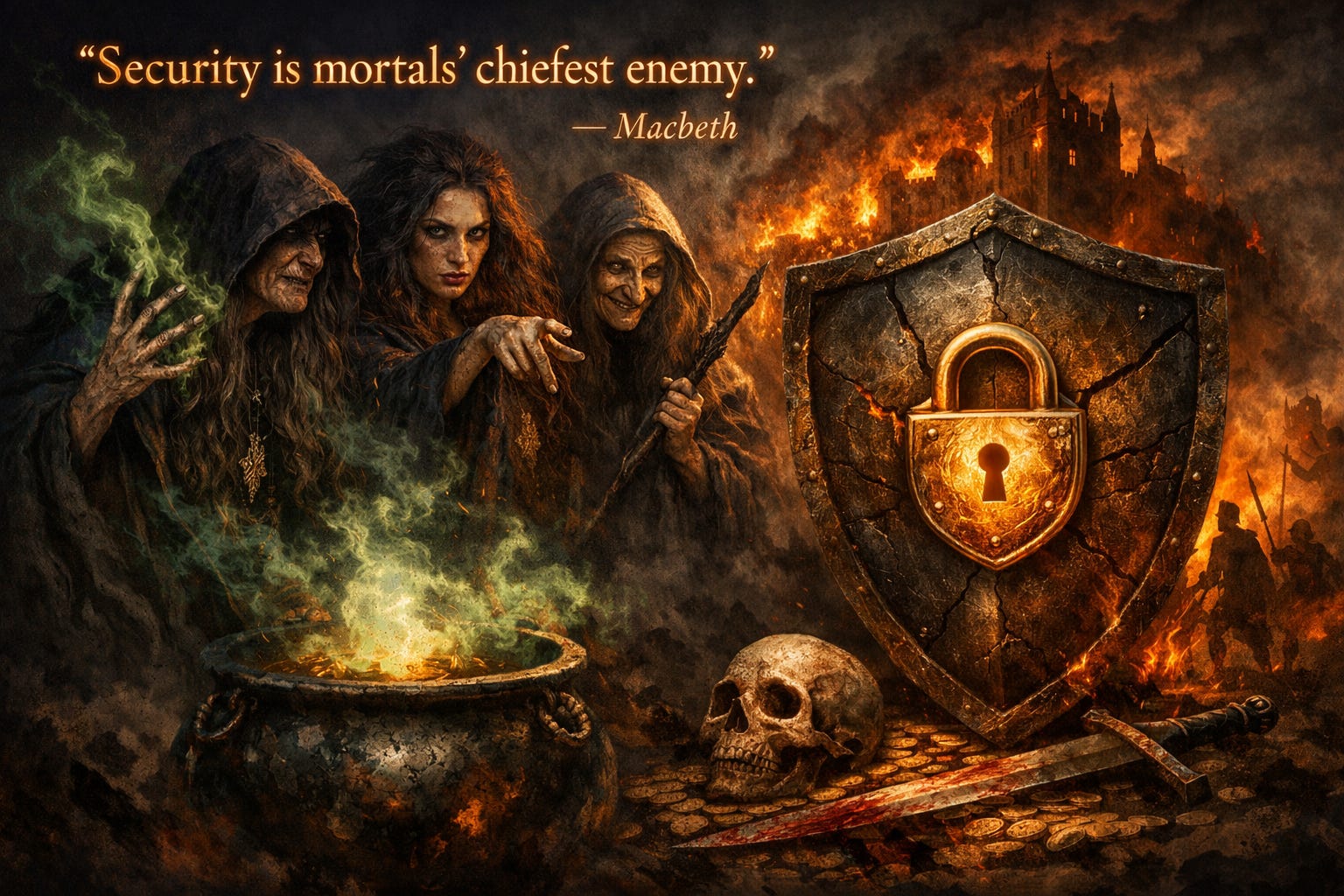
Curious? What did William Shakespeare mean—and who said it?
This line comes from the famous play Macbeth. It is spoken by the wicked witches, who conspire and declare it as part of their plan to bring about Macbeth’s downfall.
Interesting—but what does it mean? How could it be relevant to our lives? What can we learn from it?
Let me take you to another scenario. We watch, with bated breath, the unfolding of wars across the world. From the comfort of our living rooms, we observe the clashes of tyrants and oppressors, the massacres and bloodshed. We remember the Prophet and the Imams, who all endured war and sacrifice. We recall Imam Husayn, who defended the faith against corrupt leaders and wicked tyrants. We may even feel a desire to support the oppressed around the world—and that is an admirable sentiment.
However, let us also remember the words of Prophet Muhammad, who taught us that not all battles are fought on the battlefield:
“We have returned from the lesser jihad to the greater jihad.”
The greater jihad is the struggle against the self—the ego.
And in the Quran, Allah reminds us:
“Indeed, Allah will not change the condition of a people until they change what is in themselves.”
(Surah ar-Ra’d, Chapter 13, The Thunder, Verse 11)
It is the self—the ego—that may cause us to run away from the lesser jihad or find excuses to abandon the battlefield.
Many of us fail to realise that the most important battlefield is within: the struggle between the self, the ego, and our desires. Our pride, our indifference, our selfishness, our anger, our fear—the list goes on. This day-to-day battle we face every waking moment is the greater struggle.
Yet it is the battle we shy away from even more than physical war. Hundreds, if not thousands, are ready to fight for their nation, ideology, or beliefs. It is seen as a noble, sacrificial duty. However, the greater battle is the one we forget, ignore, and belittle—because we think there is little glory in it.
Who will acknowledge the inner struggle? Who will remember us for our silent battles and personal pains? Unlike worldly wars—where medals are awarded, martyrdom is honoured, and status is elevated among family and friends—the inner struggle often goes unseen.
And perhaps this is why we are further reminded in the Quran:
“And hold firmly to the rope of Allah all together and do not become divided.” (Surah aal-e-Imran, Chapter 3, The Family of Imran, Verse 103)
So, on two fronts, we are reminded that “security is mortals’ chiefest enemy.”
In Macbeth, he is misled by the witches into believing he is invincible—that no man born of a woman can kill him. This false sense of security leaves him vulnerable, caught off guard, and ultimately defeated.
For us, the lesson is twofold. Firstly, if we feel completely secure in our lives—free from threat or danger—we risk becoming complacent, leaving ourselves open to attack and defeat. Secondly, if we become satisfied and comfortable with the state of our souls, we risk an even greater loss. The devil is most pleased when we settle into ease and abandon vigilance, allowing the enemies of the soul to creep in unnoticed.
And so, we are defeated in the greatest battle of all…
The battle of the soul.
Hold firmly to the rope of Allah. Focus on the greater jihad, not just the lesser jihad.