

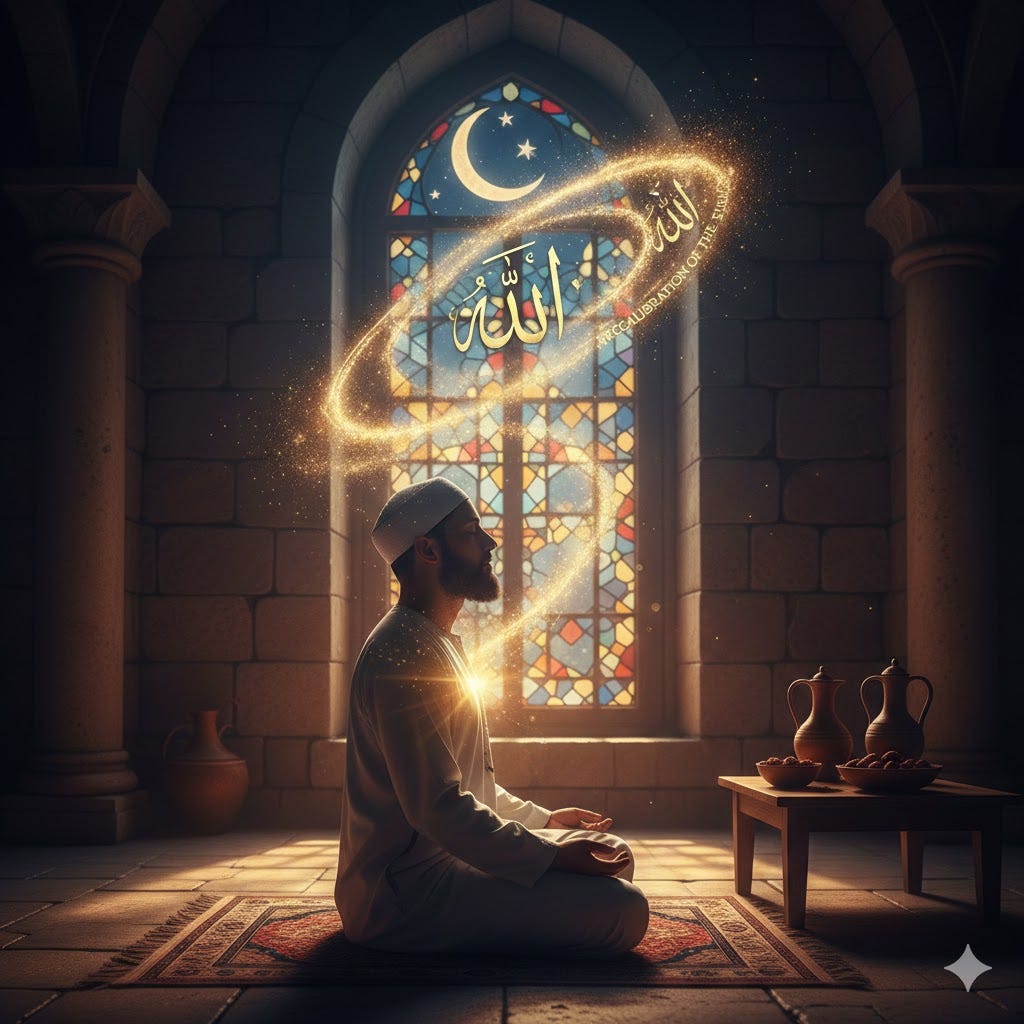
The arrival of the Holy Month of Ramadan is often viewed through the lens of religious obligation—a “spectator station” where we watch the hours pass until sunset. However, for the seeker of truth (salik), Ramadan is not a temporary interruption of life; it is a Divine Overhaul Workshop. It is the season of “Recalibration,” where the human compass, often deviated by the magnetic pull of material desires, is reset toward its True North: the Divine Presence.
1. The Fast of the Elite: Beyond the Stomach

In the school of the Ahl al-Bayt, fasting is categorised into levels. While the “Fast of the General Public” is merely abstaining from food, the “Fast of the Elite” (Sawm al-Khawas) involves the heart.
As Imam al-Sadiq (AS) beautifully articulated:
“When you fast, your hearing, your sight, your hair, and your skin must also fast.” (Al-Kafi)
From a gnostic perspective, this is the Recalibration of the Senses. We often live on “autopilot,” enslaved by our impulses. By creating a gap between the “urge” to eat and the “action” of eating, we reclaim our sovereignty. This is the “firm will” (Azm) that serves as the bedrock of spiritual wayfaring. If a person cannot say “no” to a glass of water, they will never have the strength to say “no” to the ego (nafs).
2. The Civilizational Reset: Breaking the Chains of Habit
The article notes that civilisations fall when people become slaves to destructive habits. Ramadan is a “Divine Technology” designed to prove that you are the master of your routine, not its prisoner.
The Quran reminds us:
“O mankind, indeed you are labouring toward your Lord with [great] exertion and will meet Him.”
(Quran, Surah al-Inshiqaq, Chapter 84, The Rupture, Verse 6)
🌟 Deepen Your Journey: The Joy of Fasting
To truly understand the spiritual heights of this month, explore this session on “The Great Migration.” Learn how to transition from the “prison of the self” to the “paradise of presence.” 📖 Listen or Read: The Joy of Fasting – The Great Migration
This “labouring” (kadh) is the struggle to prioritise the spirit over matter. In the gnostic tradition, this is known as Mujahadat al-Nafs (the struggle against the self). By altering our sleep, diet, and social interactions, we shatter the “robotic” nature of our existence, allowing the light of the soul to penetrate the density of the body.
3. Recalibrating the Relationship with the Beloved
During Ramadan, the connection with the Creator evolves from a legalistic duty into an intimate whisper (Munajat).
There is a profound gnostic secret hidden in the verses of fasting. In the midst of the legal rulings for Ramadan, Allah suddenly shifts to a deeply personal tone:
“And when My servants ask you concerning Me, indeed I am near.”
(Quran, Surah al-Baqarah, Chapter 2, The Cow, Verse 186)
This nearness is the goal of the “Life Reset.” It is a shift from Text to Talk. We move from reciting words to experiencing the “Intimacy of Presence.” The gnostic aim of Ramadan is to realise that the “Divine Banquet” isn’t just about the food at Iftar, but about being a guest in the Presence of the King.
4. The Pitfalls: Avoiding “Spiritual Burnout”
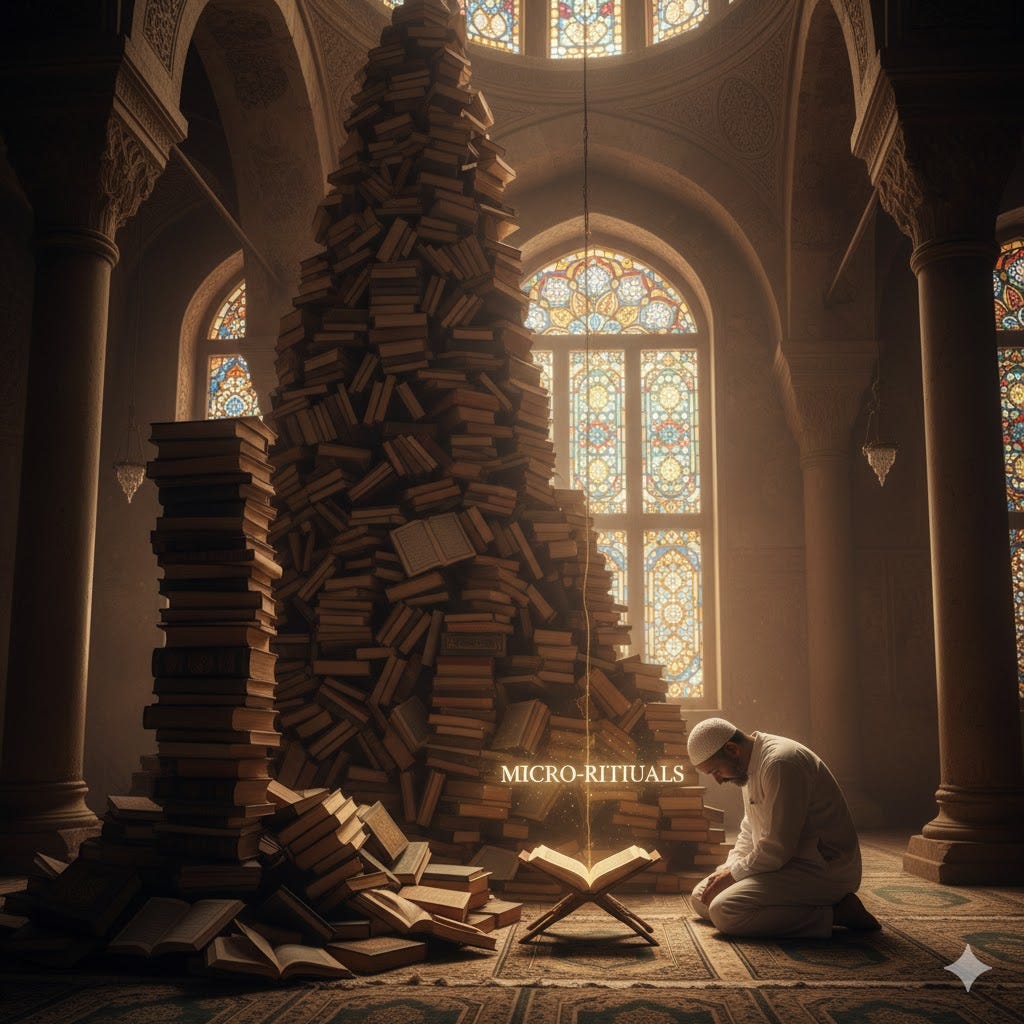
A common mistake is “Extreme Perfectionism”—trying to achieve a century’s worth of growth in a single night. The Ahl al-Bayt taught us the path of moderation and consistency.
Imam Ali (AS) famously stated in Nahj al-Balagha:
“The most beloved of deeds to Allah are the most persistent ones, even if they are small.”
True recalibration doesn’t happen through grand, failed resolutions, but through “Micro-Rituals.” Instead of finishing the Quran ten times without reflection, the gnostic approach is to sit with one verse, allowing it to settle into the heart like rain on parched earth.
5. The Launch of a “New Version”
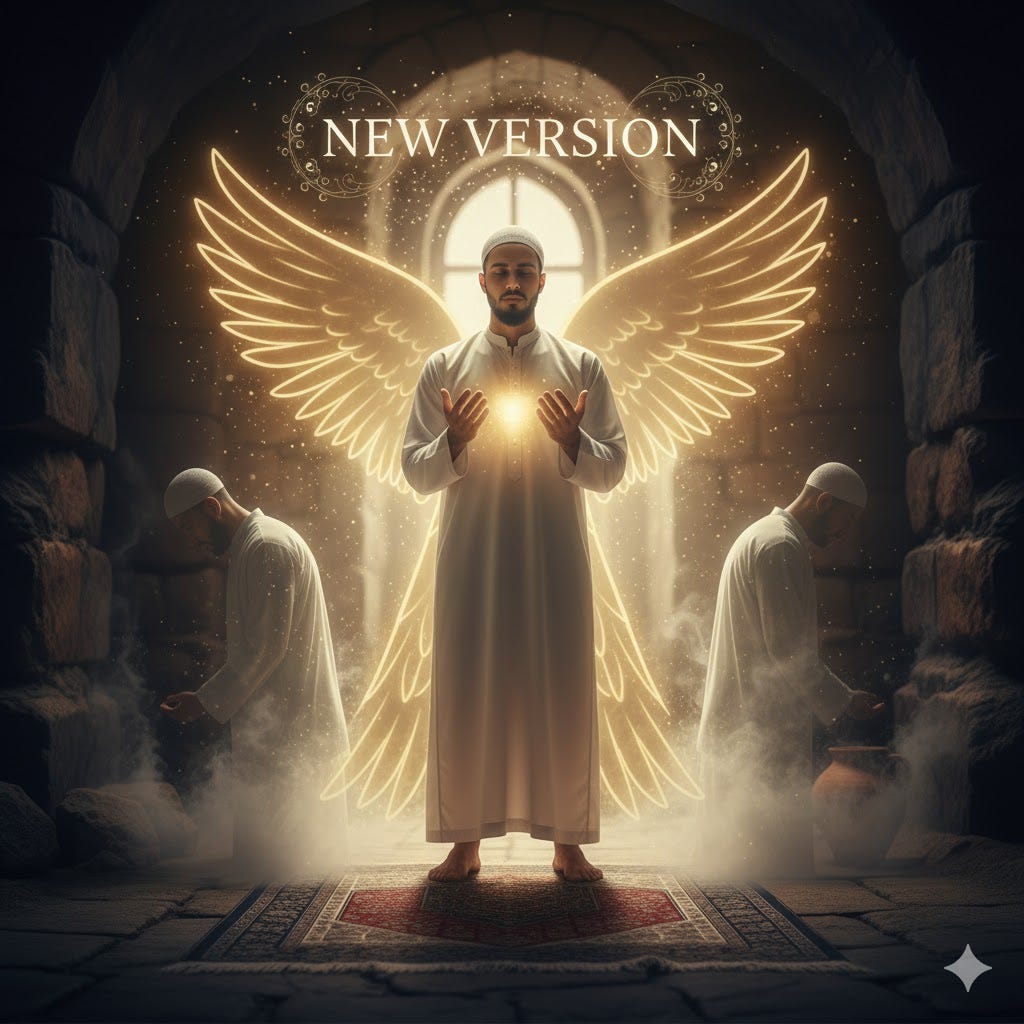
If, on the day of Eid al-Fitr, our threshold for patience has not increased, or our sensitivity to the suffering of others remains dull, then we have only recalibrated the “hardware” (the stomach) while the “software” (the soul) remains untouched.
Lady Fatima al-Zahra (SA) warned:
“What does the faster gain from their fasting if they do not guard their tongue, hearing, sight, and limbs?”
Conclusion: The Perpetual Ramadan, The “Life Reset” is successful only if it transforms the remaining eleven months of the year. Ramadan is the “training camp” where we learn Positive Asceticism (Zuhd). As Imam Ali (AS) defined it: “Asceticism is not that you should own nothing, but that nothing should own you.”
When we emerge from this month, we do not return to “normal life.” We launch a New Version—one that is balanced, disciplined, and profoundly aware of the Divine Breath that sustains every moment of our existence.