

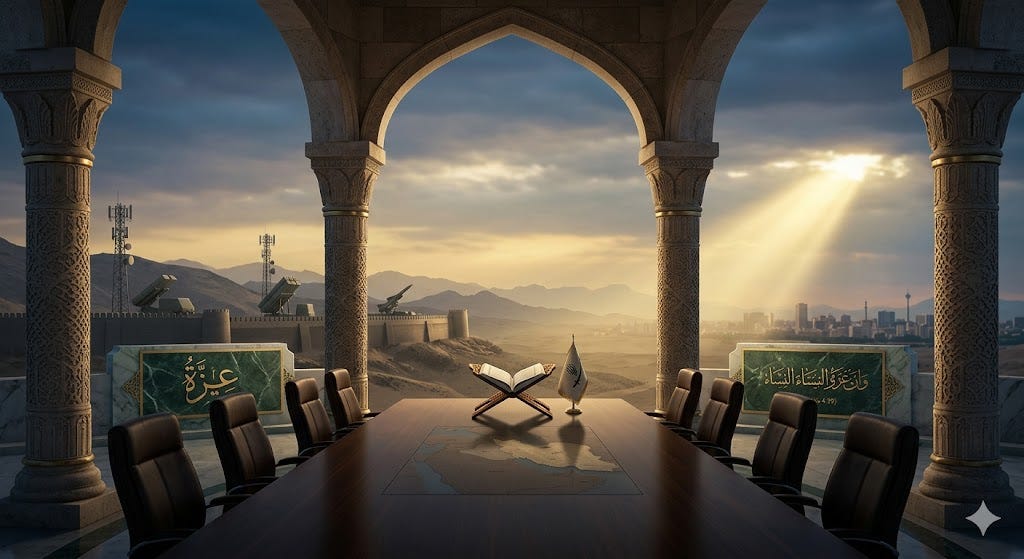
In the complex landscape of international relations, the transition between battlefield readiness and diplomatic negotiation requires a steady compass. Recent discussions surrounding possible international agreements have sparked vital conversations about the intersection of national interest, ideological principles, and historical sacrifices. Drawing upon recent insights from Hojjatoleslam Alireza Panahian regarding the country’s conditions, a clear strategic framework emerges—one rooted deeply in the principles of the Islamic Revolution, the Holy Quran, and the enduring legacy of the Ahl al-Bayt (AS).
The Anchor of Leadership: Authority in War and Peace
In moments of critical national decision-making, unity is paramount. Within the system of the Islamic Republic, the ultimate authority regarding the timing and nature of war and peace rests with the Supreme Leader (Wilayat al-Faqih). While officials and experts present their assessments, the final decision is centralised to prevent societal discord.
This structure is a direct continuation of the Quranic mandate for unified leadership under righteous authority. The Quran states:
“O you who have believed, obey Allah and obey the Messenger and those in authority among you.”
(Surah an-Nisa, Chapter 4, The Women, Verse 59)
Attempts to fracture public opinion or create division on matters of national security are acts of deviation. The Iranian people’s unity and adherence to the leadership serve as the strongest shield against external exploitation.
Dignity (Izzah) Over Expediency: The Nature of a True Agreement
A recurring anxiety during negotiations is the fear that diplomatic agreements might compromise the blood of the martyrs or the achievements of the Resistance. However, diplomacy and sacrifice are not inherently in conflict. If an agreement preserves Iran’s dignity and consolidates its power, it acts as a safeguard for those very achievements.
The primary danger lies in the “compromising current”—factions that, sometimes under the guise of revolutionary rhetoric, attempt to downplay battlefield triumphs to push for concessions. As the Revolution moves through its Second Phase, “passive expediency” driven by fear and weakness must be eliminated. History has repeatedly shown that compromise born from weakness harms national interests.
This principle is echoed by the Master of Martyrs, Imam Husayn (AS), whose famous declaration on the day of Ashura established the eternal Shia standard for diplomacy and conflict:
“Hayhat Minna Zillah” (Disgrace is far from us). Furthermore, the Quran strictly forbids seeking peace out of a sense of inferiority:
“So do not weaken and call for peace while you are superior; and Allah is with you and will never deprive you of [the reward of] your deeds.”
(Surah Muhammad, Chapter 47, Verse 35)
Basirah (Insight) Against Psychological Warfare
Before and during any agreement, adversaries predictably escalate threats to frame diplomacy as a “retreat” by Iran, rather than an acknowledgement of Iranian power. Some domestic voices echo this misleading narrative, framing the nation’s natural rights as something requiring the enemy’s permission.
Recognising falsehood when it is dressed as truth requires profound political awareness and insight (Basirah). In Nahj al-Balagha (Sermon 50), Imam Ali (AS) warns of this exact psychological tactic, explaining that sedition and deception occur when a mixture of truth and falsehood is presented to confuse the masses:
“If falsehood had been kept separate from truth, it would not have been hidden from those who seek it... but a handful of this and a handful of that are taken and mixed together.”
Preserving achievements means protecting them from cognitive distortion. The nation must remain vigilant to ensure the enemy’s narratives are not reproduced domestically.
The Synergy of the Field and Diplomacy
A definitive strength of the nation today is the unbroken coordination between the “field” (military and strategic presence) and diplomacy. Diplomatic leverage is not born in the negotiating room; it is forged on the battlefield. It is this synergy that forces the enemy to retreat.
Crucially, an agreement does not equate to the end of readiness. Fighters and security forces must remain continually prepared to respond decisively to any breach of terms by the adversary. True power is demonstrated through rapid, unhesitating response.
This doctrine of perpetual readiness is commanded by the Quran:
“And prepare against them whatever you are able of power and of steeds of war by which you may terrify the enemy of Allah and your enemy...”
(Surah al-Anfal, Chapter 8, The Spoils of War, Verse 60)
Gratitude, Mourning, and the Continuation of the Path
Political and military vigilance alone are not enough to sustain a revolution; the societal soul must be nourished. Traditions of gratitude and mourning—specifically the profound Shia tradition of mourning for the Ahl al-Bayt (AS) and the martyrs of Karbala—are not merely historical rituals. They are the engines of social identity and the sustainers of the spirit of resistance.
These gatherings cultivate a spirit that distrusts the oppressor and remains loyal to the oppressed. The path forward is a continuation of this sacred journey: maintaining strength, rejecting passive compromise, and holding fast to the ideological roots that have allowed the Islamic Republic to stand firm in the face of global arrogance.
Reference: Shaykh Ali Reza Panahian