

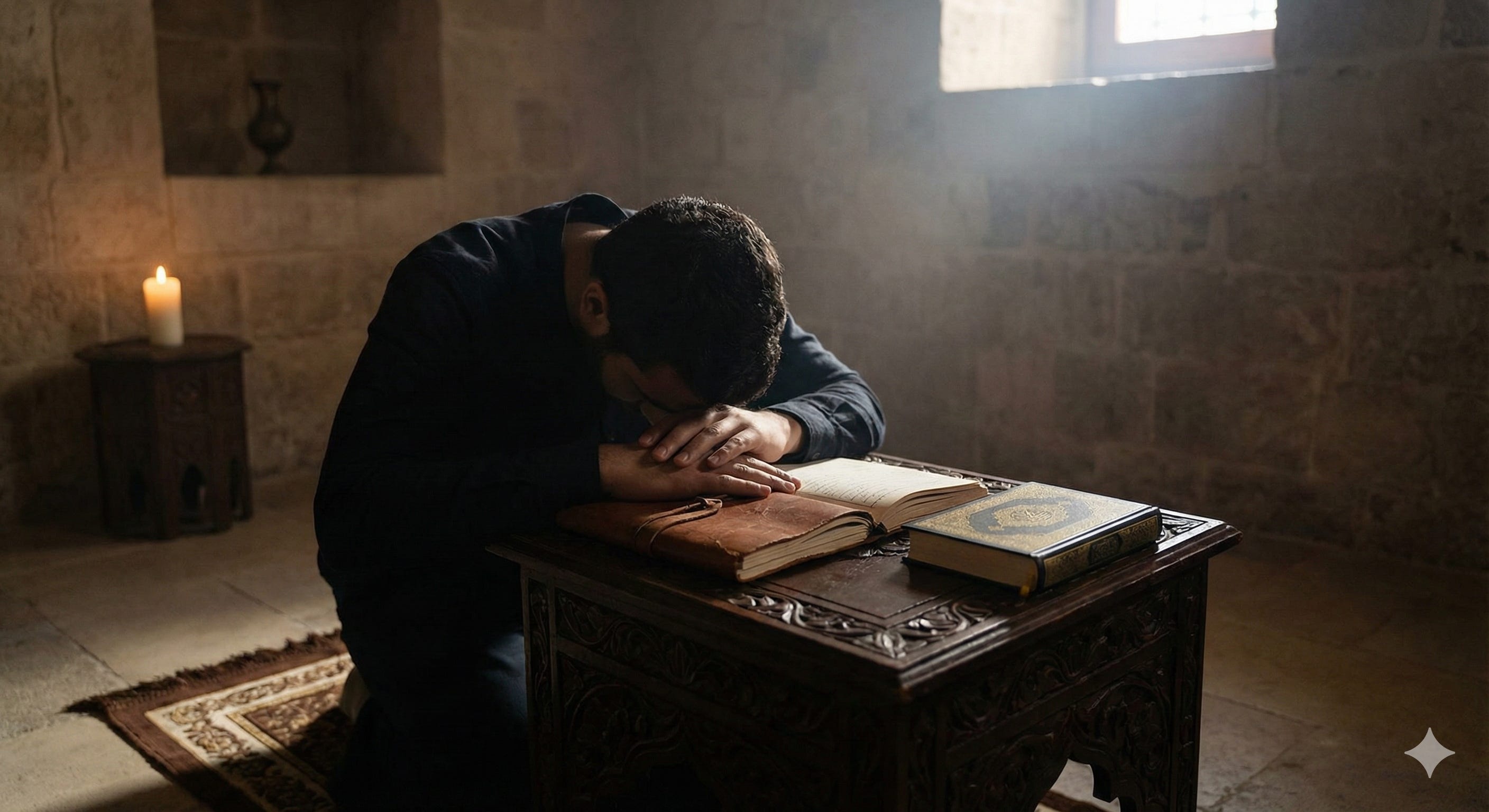
In our modern world, we are often sold a specific image of strength: the unshakeable professional, the flawless parent, the individual who never stumbles. We are taught that to be strong is to be impenetrable.
However, this definition is an illusion. Maintaining the facade of perfection is not strength; it is merely pressure.
True strength, as taught by the Holy Quran and the Ahlul Bayt (AS), begins with a moment of profound vulnerability—the moment you look in the mirror and say, “I messed up. This is where I am weak. I need to work on this.”
Here is how accepting your flaws transforms you from a person hiding behind a mask into a fortress of spiritual and emotional resilience.
You Stop Wasting Energy on the “Mask”
When you spend your life hiding your mistakes, you are constantly acting, defending, and fearing exposure. This state of constant vigilance exhausts the soul. It deprives you of the energy needed for genuine worship and growth.
In the teachings of the Ahlul Bayt, truthfulness (Sadiq) is not just about speaking the truth to others, but being true to oneself. When you drop the mask, you enter a state of inner peace.
The Wisdom of the Commander of the Faithful: Imam Ali (AS) said: “He who adopts truthfulness, the heavier of his burdens are removed from him.” (Ghurar al-Hikam)
By accepting your flaws, you put down the heavy burden of pretense. You relax. That energy you wasted on hiding can now be channeled into Islah (self-reformation).
You Gain Control Through Muhasaba (Self-Accounting)
Ignoring mistakes does not erase them; it gives them sovereignty over your subconscious. When you deny a weakness, you remain a prisoner to it. However, the moment you name it, you begin to tame it.
This is the essence of Muhasabat al-Nafs (self-accounting), a critical practice in the school of the Ahlul Bayt.
The Standard of the Believer: Imam Musa al-Kadhim (AS) taught: “He is not of us who does not reckon with himself every day; if he performed a good deed, he asks Allah to give him more of it, and if he performed a bad deed, he asks Allah’s forgiveness and repents for it.” (Usul al-Kafi)
Owning your weakness allows you to plan and change. You move from the passivity of guilt to the activity of rectification.
Mistakes Become Lessons, Not Labels
A fragile ego views a mistake as a definition: “I am a failure.” A strong soul views a mistake as data: “I failed in this instance. Now I know what to avoid.”
The Ahlul Bayt (AS) taught us that a mistake acknowledged with humility is spiritually superior to a success that breeds arrogance (Ujb).
A Profound Insight: Imam Ali (AS) said: “The sin that makes you sad and repentant is better in the sight of Allah than the good deed which makes you vain.” (Nahj al-Balagha, Saying 46)
When you accept your weaknesses, you strip them of their power to define your identity. You realise that your value comes from your relationship with Allah, not your worldly perfection.
You Develop Emotional “Toughness”
People who cannot admit faults are brittle. Like dry wood, they snap under the pressure of correction. They fear feedback and react with anger because their self-worth is tied to an illusion of perfection.
Conversely, those who accept their weaknesses are like water—adaptable and impossible to shatter. They stay calm because they have nothing to hide.
The Nature of the Intellect: Imam Ja’far al-Sadiq (AS) describes the person of intellect (Aql) as one who accepts the truth, even if it is against them.
Furthermore, the Quran describes the believers as: “Those who suppress their anger and pardon men; and Allah loves the doers of good.”
(Surah Ali ‘Imran, Chapter 3, The Family of Imran, Verse 134)
True emotional toughness is the ability to hear criticism, filter it for truth, and discard the rest without losing your composure.
Spiritual Elevation: Vulnerability is the Key to Mercy
Perhaps the most important aspect of accepting weakness is spiritual. Allah (SWT) does not help those who arrogantly pretend they are self-sufficient. He aids those who come to Him with broken hearts.
In the supplications of the Ahlul Bayt, specifically Sahifa Sajjadiyya and Dua Kumayl, we see the Imams—despite their purity—teaching us how to articulate our weakness before the Almighty.
The Cry of the Servant: As taught by Imam Ali (AS) in Dua Kumayl: “O Allah! I find no one to pardon my sins... and to turn my ugly deeds into beautiful deeds save You.”
When you say, “Ya Allah, I am struggling, I am weak,” you open the doors of Tawbah (repentance) and Divine support (Tawfiq). Your weakness becomes the very vessel through which Allah’s strength enters your life.
You Stop Comparing and Start Building
Once you accept your own unique set of struggles, you stop looking sideways at others. You realise that everyone is fighting a battle you know nothing about.
Other people’s success becomes an inspiration, not a threat.
Setbacks become pauses, not endings.
You focus on your own journey toward Allah, building success on steady, consistent effort rather than sudden leaps.
The Quranic Perspective: “And that there is not for man except that [good] for which he strives.”
(Surah An-Najm, Chapter 53, The Star, Verse 39)
The Bottom Line
The equation for spiritual and mental strength is simple:
❌ Hiding weaknesses = Fear, stress, arrogance (Kibr), and stagnation.
✅ Owning weaknesses = Growth, resilience, humility, and Divine assistance.
Strong people are not flawless. As followers of the Quran and the Ahlul Bayt, we strive to be self-aware, honest, and constantly turning back to Allah.