

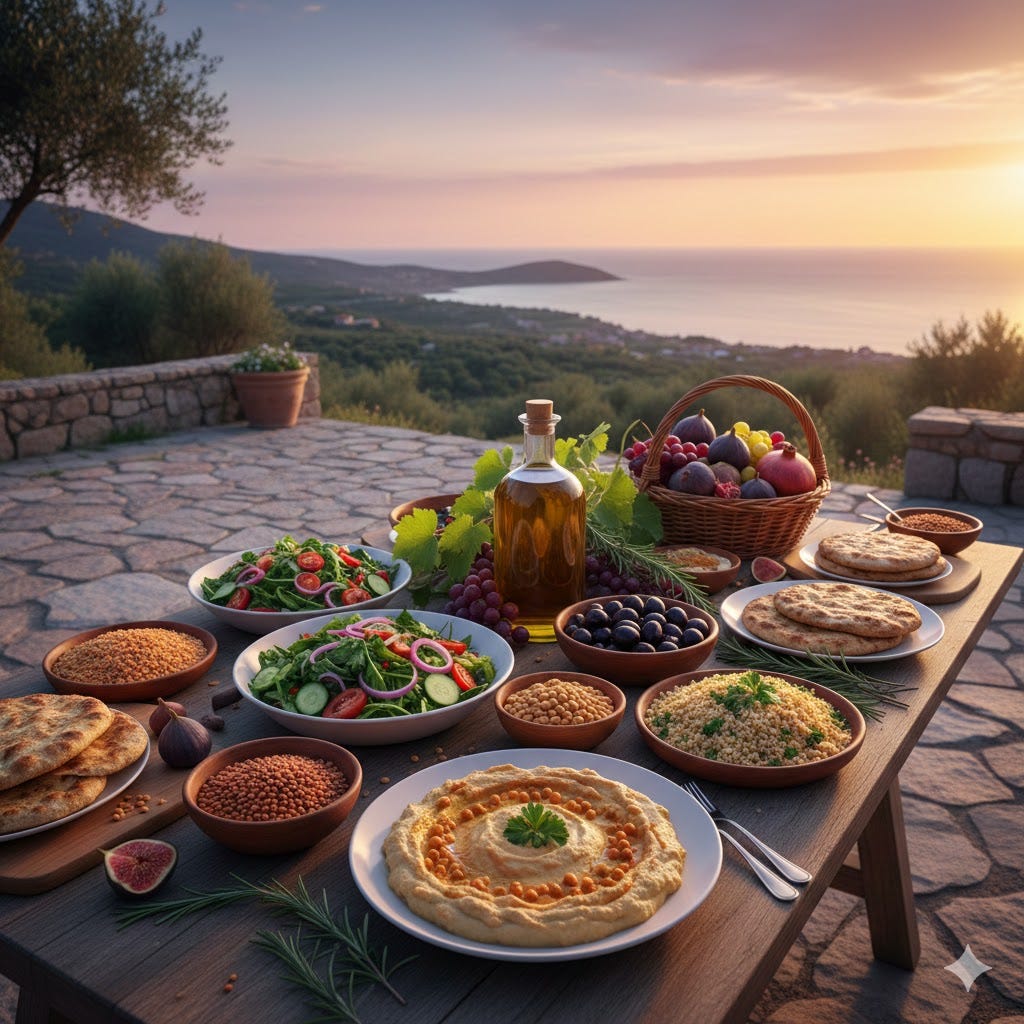
The modern world is obsessed with “superfoods” and restrictive fad diets, yet one culinary tradition consistently rises above the noise: the Mediterranean diet. This dietary pattern is not merely a “menu” but a lifestyle rooted in history, geography, and—for those who look closer—divine wisdom.
While science confirms its ability to reduce inflammation and protect the heart, the “Mediterranean” way of eating mirrors many of the nutritional principles established over 1,400 years ago in the Quran and the teachings of the Ahl al-Bayt (AS).
The Foundation of the Micro-Region
The Mediterranean diet is not a monolith. It is a collection of diverse micro-regions—from the mountain villages of Crete to the coastal towns of the Levant and North Africa. Despite these variations, the core architecture remains the same: a focus on whole, unprocessed plants and healthy fats.
This regional diversity reminds us of the Quranic verse:
“And it is He who produces gardens, trellised and untrellised, and palm trees and crops of varying taste and olives and pomegranates, similar and varied...” (Surah al-An’am, Chapter 6, The Cattle, Verse 141).
The Liquid Gold: Olive Oil
At the heart of every Mediterranean micro-region is Olive Oil. Science now recognises it as a powerhouse of monounsaturated fats that combat chronic inflammation.
In Islamic tradition, the olive tree is described as Mubarak (Blessed). The Quran refers to it in the famous “Verse of Light” (Surah an-Nur, Chapter 24, The Light, Verse 35) as coming from a tree that is “neither of the East nor of the West.” Furthermore, the Prophet Muhammad (S) and the Imams of the Ahl al-Bayt (AS) frequently recommended its use. Imam Ali (AS) is narrated to have said: “Consume olive oil and anoint yourselves with it, for it is from a blessed tree.”
Myths and Mistakes: The Importance of Moderation
One of the most common mistakes in modern nutrition is the “Health Halo”—the idea that one can eat unlimited portions of “healthy” fats or processed “Mediterranean-style” snacks.
Authentic Mediterranean eating is defined by moderation, a core tenet of Islamic etiquette (Adab). The Ahl al-Bayt (AS) emphasised that the stomach should never be completely filled. Imam Ja’far al-Sadiq (AS) advised:
“The son of Adam does not fill a vessel worse than his stomach.”
The Mediterranean practice of eating slowly and communally aligns perfectly with the Prophetic Sunnah of sharing meals and avoiding haste, which aids digestion and prevents overeating.
Plant-Forward, Not Meat-Heavy
A common myth is that Mediterranean food is centered on grilled meats. In reality, traditional diets in these regions treat meat as a luxury or a flavouring agent, focusing instead on legumes (lentils, chickpeas) and grains.
This echoes the guidance of Imam Ali (AS), who famously cautioned:
“Do not make your stomachs graveyards for animals.”
By prioritising plants and grains—like barley, which was the preferred grain of the Prophet (S)—the Mediterranean diet provides the fibre and antioxidants necessary for longevity.
Vinegar and Bitter Greens: The Forgotten Healers
Regional Mediterranean salads often feature bitter greens and vinegar. Interestingly, the Ahl al-Bayt (AS) held vinegar in high regard. Imam al-Sadiq (AS) mentioned:
“Vinegar is a good food; it breaks the bile, brings life to the heart, and kills the parasites of the stomach.”
Modern science now confirms that vinegar can help regulate blood sugar spikes after a meal.
Conclusion: A Sustainable Covenant
Eating “Mediterranean” is more than just a health hack; it is a return to a natural, balanced way of living that honours the body. By stripping away the myths of processed “health foods” and returning to the “Blessed” ingredients mentioned in the Holy Quran—olives, grapes, pomegranates, and grains—we nourish not just our physical hearts, but our spiritual well-being.
The best way to start is small: swap butter for olive oil, prioritise the plant over the protein, and remember that every meal is a provision from the Creator that deserves to be eaten with mindfulness and gratitude.