

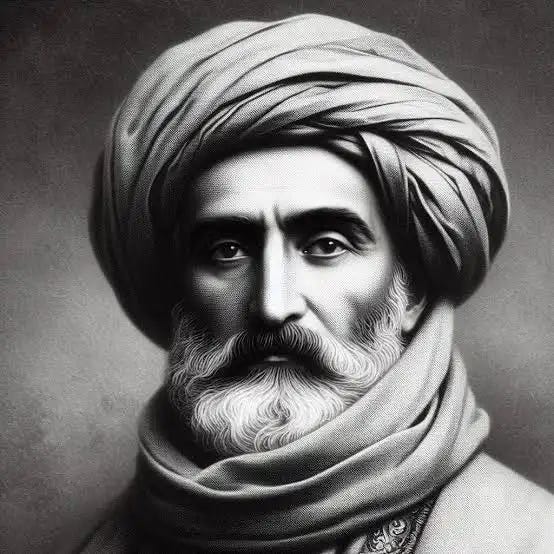
Nasir al-Din al-Tusi is widely celebrated as the astronomer whose mathematical breakthroughs paved the way for modern understandings of the universe. Yet, before he looked to the stars, Tusi mapped an equally vast and complex universe: the human soul.
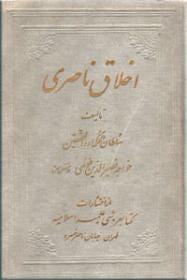
Written during his time under the patronage of the Ismaili governor in Quhistan, his defining philosophical work, Akhlaq-i Nasiri (The Nasirean Ethics), is a monumental achievement in Islamic thought. It is not merely a book on how to be “good.” It is a comprehensive blueprint for how to live, manage a household, and govern a society.
By beautifully harmonising Greek philosophical logic with deep Islamic theological principles, Tusi created a manual for human flourishing that was studied across the Persianate world for centuries. He divided the human experience into three distinct, yet interconnected, spheres.
The Inner World (Individual Ethics)
For Tusi, the journey to a just society begins within the individual. He argued that God endowed humans with a unique capacity for rational thought, and true spiritual perfection is reached only when our reason governs our base desires.
Building upon classical philosophy, Tusi identified three core faculties of the human soul:
The Rational: The highest faculty, which seeks truth, knowledge, and closeness to the Divine.
The Irascible: The spiritual engine of courage, ambition, and defence.
The Appetitive: The physical drives that seek sustenance and bodily pleasure.
Tusi emphasised the Golden Mean—the idea that virtue is the perfect balance between two extremes. True courage, for instance, sits precisely between the excess of recklessness and the deficiency of cowardice. When a believer successfully allows their rational soul to tame and balance the other two faculties, they achieve the highest individual virtue: Justice.
The Sanctuary of the Home (Economics)
In Tusi’s era, “economics” referred not to national wealth, but to the ethical management of the household. He viewed the family unit as the foundational building block of the Ummah (the Muslim community).
Tusi provided intensely practical advice on family life that remains deeply relevant. He emphasised earning a livelihood through honourable (halal) means and striking a balance between financial prudence and generosity—warning equally against the spiritual diseases of hoarding wealth and reckless extravagance.
Perhaps most importantly, he elevated the role of parenting. Tusi argued that the moral education of children was not a secondary task but the absolute paramount duty of parents, shaping a child’s ethical character from their earliest days.
The Virtuous Society (Politics)
The final section of Akhlaq-i Nasiri scales up from the home to the entire state. Humans, Tusi observed, are naturally social creatures; we cannot survive, let alone achieve spiritual perfection, in total isolation.
Drawing inspiration from Al-Farabi’s concept of the “Virtuous City,” Tusi detailed what a just Islamic society should look like. He asserted that society requires righteous leadership and divine law to prevent chaos. In his vision, a just society is one where the ruler is guided by wisdom, and citizens actively cooperate to elevate one another toward moral perfection.
Just as the individual soul requires the balance of its faculties, a just state requires the balance of its people. Every individual must receive what they are due and contribute their unique skills to the common good.
A Lasting Legacy: Akhlaq-i Nasiri stands as a testament to the intellectual confidence of medieval Islamic civilisation. Tusi did not view reason and revelation as enemies; instead, he used the rigorous logic of classical philosophy to articulate and defend the ethical truths of Islam.
In a modern world that often feels fractured, Tusi’s 13th-century masterpiece offers a timeless reminder: true justice—whether in a nation, a home, or a human heart—is fundamentally a matter of perfect balance.
Reference: Nasir al-Din al-Tusi