

The Son of the Teacher from Ukbara
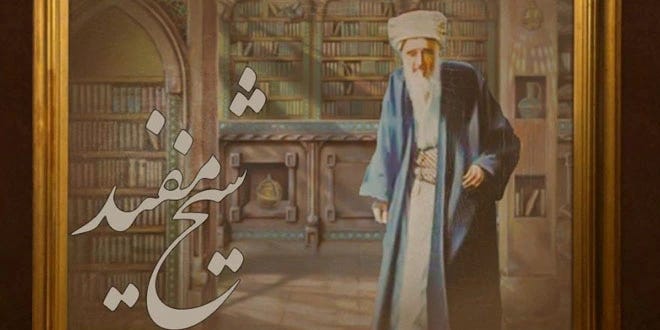
Born on the 11th of Dhu al-Qa’dah, 336 AH (c. 948 CE), in the small town of ‘Ukbara just north of Baghdad, Muhammad b. Muhammad b. al-Nu’man would grow to become a giant of Islamic history.
In his early years, he was known simply as Ibn al-Mu’allim—”The Son of the Teacher”—a nod to his father’s profession. Recognising his son’s precocious intellect, his father moved the family to Baghdad, the bustling metropolis of the Islamic world, to ensure he received the finest education available.
It was there, in the lecture halls of Baghdad, that he earned the title by which history remembers him: al-Mufid (”The Beneficial” or “The Instructor”). Accounts suggest this title was bestowed upon him by a prominent Sunni scholar, al-Rummani, who was so impressed by the young student’s ability to debate complex theological points that he conceded, “You are truly mufid (beneficial).”
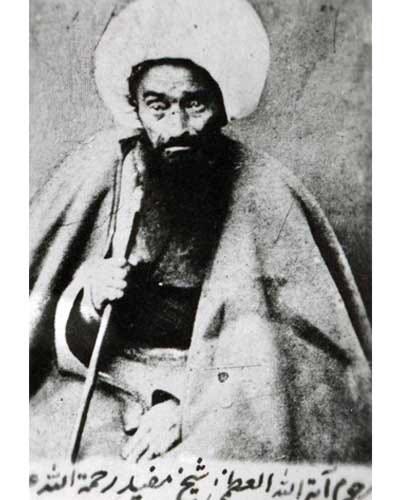
From these humble beginnings as a student in a diverse city, he rose to become the undisputed leader of the Imami Shi’a, navigating a world of intense sectarian rivalry with a brilliance that commanded respect from friend and foe alike.
The Context: The Golden Age of Baghdad
To understand al-Mufid’s influence, one must view him against the backdrop of 4th-century AH Baghdad. This was the Buyid era, a “golden age” where the marketplace of ideas was as vibrant as the city’s trade routes. It was a hub where Hanbalis, Mu’tazilites, Ash’arites, and Shi’as engaged in fierce, open debate.
Into this dynamic arena stepped Shaykh al-Mufid. More than just a participant, he became a defining force, navigating the complex intersection of revelation and reason to reshape Imami theology and jurisprudence forever.
Architect of Usul al-Fiqh: A Rational Revolution
Before al-Mufid, Shi’i legal theory was often polarized between rigid traditionalism and emerging rationalist trends. Shaykh al-Mufid is widely credited with architecting the discipline of Usul al-Fiqh (Principles of Jurisprudence) by steering it toward a “disciplined rationalism.”
His contributions to legal theory were threefold:
Methodical Rationalism: He rejected the notion that legal theory should rely solely on transmitted texts. Instead, he integrated logical analysis and rational principles, moving the school away from a purely “tradition-centered” phase.
The Science of Hadith: Al-Mufid was a pioneer in critical analysis. He did not accept every report attributed to the Imams blindly. He implemented rigorous isnād (chain of transmission) criticism, famously stating in al-Muqni’a that one cannot act upon a report unless it is established through a trustworthy method. This filtered out unreliable narrations that had previously cluttered the tradition.
Defining Ijtihād: He formalised Ijtihād not as freelance opinion, but as a disciplined process of uncovering divine rulings through valid evidence. This laid the groundwork for the Usuli school that dominates Shi’i scholarship today.
The Defender of Theology (Kalam)
While he systematised the law, al-Mufid also breathed new life into Imami theology. He famously adopted the argumentative tools of the Mu’tazilites—the leading rationalist theologians of the time—but deployed them to defend specific Shi’i doctrines.
Rationalising Belief: Unlike his teacher, the great traditionist Shaykh al-Saduq, who relied heavily on hadith to explain belief, al-Mufid argued that faith must be grounded in reason. He provided logical proofs for the necessity of divine justice, human agency, and prophecy.
The Doctrine of Imamate: In the heated intellectual climate of Baghdad, the concept of the Imamate was a primary target of criticism. Al-Mufid was the first to structure a systematic academic defense of the Imamate, arguing for the necessity of a divinely appointed leader, their infallibility (‘isma), and their role as the guardian of the Sharia.
The Ethics of Debate: Historical accounts describe al-Mufid as a formidable debater who commanded the respect of his opponents. Leading Sunni scholars, such as the Mu’tazilite judge Abd al-Jabbar, engaged with him regularly. His style was characterised by intellectual agility and fairness.
A Legacy of Giants
Perhaps the greatest testament to a scholar’s worth is the caliber of their students. Shaykh al-Mufid did not just write books; he built a generation. He was the teacher of al-Sharif al-Murtada and Shaykh al-Tusi—two titans who would go on to finalise the structures of Shi’i jurisprudence and theology. Shaykh al-Tusi himself remarked that he had never seen anyone more capable at teaching and constructing theoretical arguments than al-Mufid.
Conclusion: The Resting Place of a Master
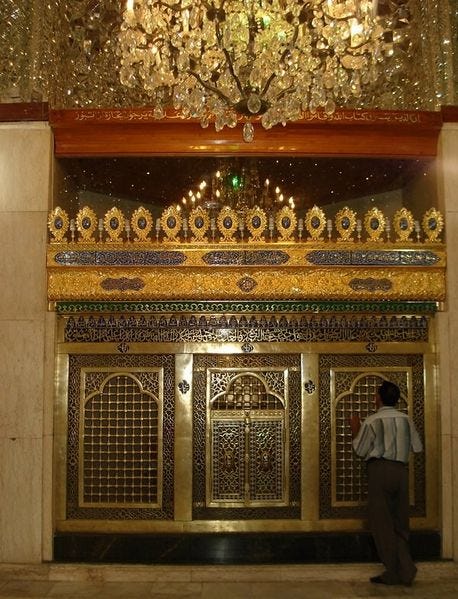
Shaykh al-Mufid passed away in Ramadan 413 AH (1022 CE). His death was a momentous event in Baghdad; contemporary accounts describe a day of overwhelming public grief, with tens of thousands of people, from various schools of thought, gathering to pay their respects.
He was initially buried in his own home, but his body was later transferred to the Al-Kadhimiya Mosque in Baghdad. There, he lies near the shrine of the two Imams he served so faithfully—Imam Musa al-Kadhim and Imam Muhammad al-Taqi.
Today, his resting place remains a site of visitation, and his intellectual legacy stands as a middle path for the modern age: a faith deeply rooted in revelation but vigorously defended by reason. His life reminds us that the defense of religion is most effective not through isolation, but through critical analysis, ethical dialogue, and the courage to engage with the wider world.
Reference: Islamic Centre of England