

A Difficult Conversation — But a Necessary One
Let’s be honest from the very beginning. This is one of the most challenging articles in this entire series to write — not because the Islamic position is unclear, but because we live in a cultural moment where stating that position at all invites criticism, misunderstanding, and sometimes hostility.
But this series is based on Gunah-e-Kabira — a book of Islamic scholarship — and we committed from the start to presenting what Ayatollah Dastaghaib Shirazi actually wrote, faithfully and honestly. So that is what we will do.
The eleventh greater sin is sodomy. And we will discuss it the way the Ahlul Bayt discussed everything — with honesty, with clarity, and without losing sight of the mercy of Allah that runs through even the most serious of warnings.
This article is not about hatred toward any person. Islam does not permit cruelty, mockery, or contempt toward any human being, regardless of their sins. Every soul is precious. Every person struggling with anything — including this — deserves to be treated with the dignity that belongs to every child of Adam (AS). But love for people does not mean silence about what Allah has prohibited. And on that, Islam has always been clear.
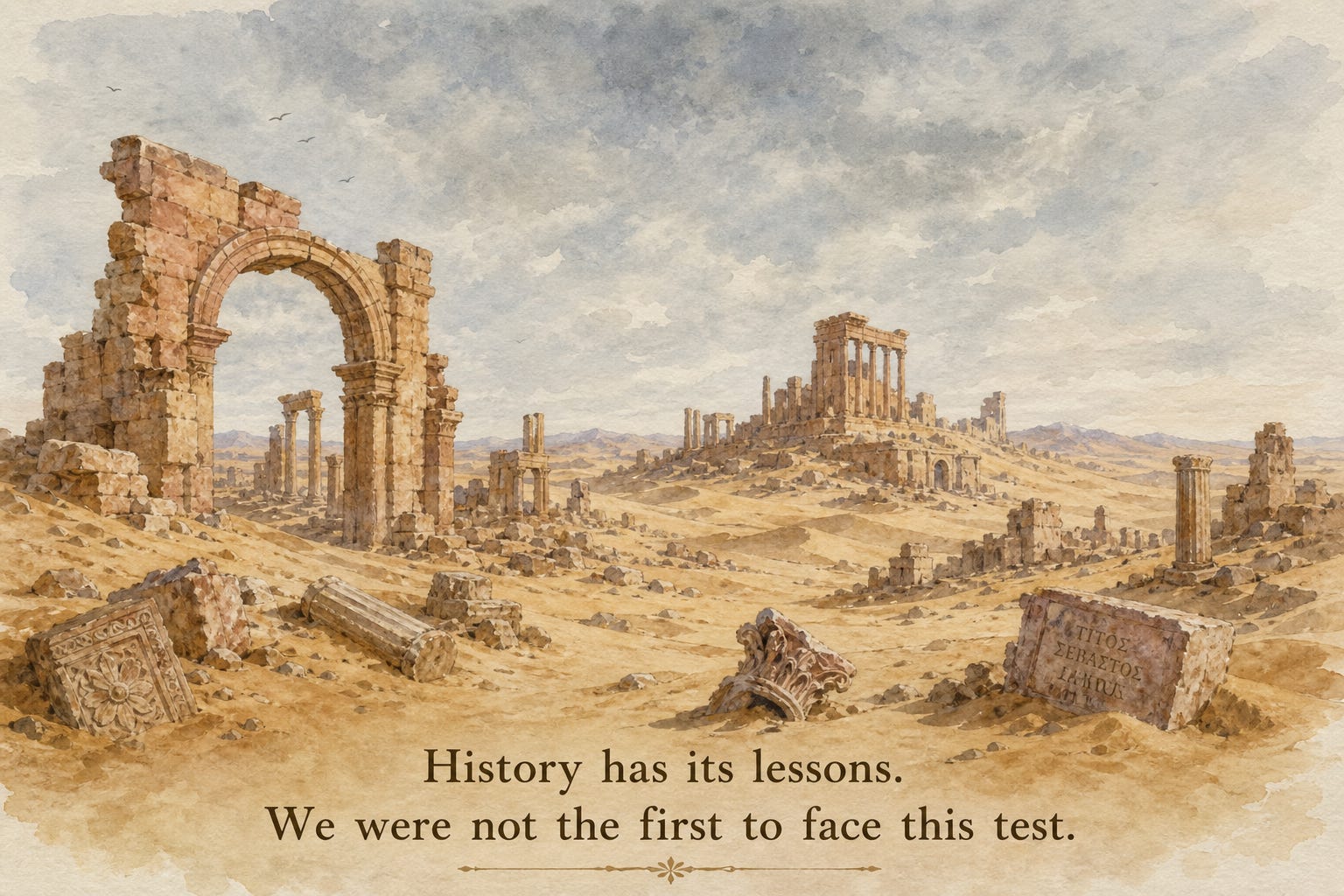
The Quran does not address this sin abstractly. It addresses it through one of the most detailed and sobering stories in the entire Book — the story of Prophet Lut (AS) and the people of Sodom.
The eleventh sin classified as a greater sin is sodomy. This is confirmed in the sayings of Imam Ja’far as-Sadiq (AS) and Imam Ali al-Ridha (AS). In fact, the Ahlul Bayt described it as a sin even greater than fornication, with more severe retribution and punishment.
Prophet Lut (AS) was sent to a people who had introduced a sexual practice that had never before existed among humanity — men seeking sexual gratification from other men. He warned them repeatedly. He pleaded with them. He offered them alternatives. They rejected him with arrogance and mockery.
In Surah al-A’raf, Chapter 7, The Elevated Places, Verses: 80-81, Allah records his words to them:
“Do you approach such immorality as no one has preceded you with from among the worlds? Indeed, you approach men with desire instead of women. Rather, you are a transgressing people.”
And in Surah Hud, Chapter 11, Verses: 82-83, when the angels of punishment arrived:
“So when Our command came, We made the highest part of it the lowest and rained upon them stones of baked clay, layered, marked from your Lord. And it is not from the wrongdoers far away.”
The entire civilisation — destroyed. Turned upside down. Buried under stones. The Quran returns to this story repeatedly — in Surah al-A’raf, Hud, al-Hijr, ash-Shu’ara, an-Naml, al-Ankabut, as-Saffat, al-Qamar — more times than almost any other historical account. The repetition is deliberate. This is a warning Allah wanted firmly embedded in the memory of every generation.
And then the final words of that last verse: “And it is not far from the wrongdoers.” Scholars across centuries have understood this as a timeless statement — the fate of those people is not simply ancient history. It is a standing warning for every era.
What the Ahlul Bayt (AS) Taught
Imam Ja’far as-Sadiq (AS) said:
“Certainly Allah destroyed a complete Ummah — the people of Lut (AS) — because they indulged in sodomy. Allah did not destroy even one man specifically for adultery.”
The comparison to Zina — which we covered in the previous article — is significant. Zina is a greater sin with severe consequences. But the Imam is pointing out that the collective, civilisational punishment of divine destruction was specifically associated with sodomy among the people of Lut, not with adultery. This speaks to the unique gravity with which the Ahlul Bayt regarded this act.
The Prophet (S) said: “The thing I fear most for my Ummah is the act of the people of Lut.”
He did not say he feared murder most, or Shirk most, or even Riba — for this specific concern about his community, he named the sin of Lut’s people. Because he saw, even in his own time, early signs of its spread. And history has proven his fear well-founded.
Imam Ali al-Ridha (AS) listed it among the greater sins and explained the wisdom behind its prohibition: it violates the natural order that Allah embedded in creation, destroys the structure of the family, extinguishes the continuation of human lineage, and represents a fundamental rejection of the fitra — the innate nature Allah placed in every human soul.

The Concept of Fitra — The Natural Order
One of the most important concepts in understanding this sin from an Islamic perspective is Fitra — the original, innate nature that Allah created within every human being. It is the spiritual and psychological blueprint of the human soul as Allah intended it.
The Ahlul Bayt taught that the attraction between male and female — and the family structure that flows from it — is part of the Fitra. It is not a cultural convention or a historical accident. It is a divine design. Marriage between a man and a woman, the birth of children, the raising of a family — these are not arbitrary social arrangements. They are embedded in the very structure of creation by the Creator Himself.
When a person acts against the Fitra — and the Imams were clear that this applies to sodomy — they are not simply breaking a rule. They are acting against the design of their own soul. And the consequences of that, the Ahlul Bayt taught, are felt at every level — spiritual, psychological, physical, and social.
This is not a claim that everyone who experiences same-sex attraction is choosing to fight against their nature. The Ahlul Bayt were careful to distinguish between inclination and action. A person may experience desires they did not choose. What they are accountable for is what they do with those desires. And on that — on the act itself — Islamic law is unambiguous.
Sodomy as Kufr — What Does That Mean?
Ayatollah Dastaghaib Shirazi includes a serious discussion in this chapter on a narration that describes this sin as Kufr — disbelief. This requires careful explanation, because it is a strong word and can be misunderstood.
What the scholars explain is that calling this sin Kufr does not automatically mean the person who commits it has left Islam entirely. Rather, it means that this act represents such a profound violation of the divine order — such a fundamental rejection of Allah’s design for creation — that it carries within it the quality of disbelief. It is an act that stands in direct opposition to the testimony that Allah is the Creator whose design for humanity deserves to be honoured.
It is the same way that the Quran calls certain injustices dhulm — oppression in a divine sense. It is a statement about the gravity and the nature of the act, not necessarily a verdict on the person’s eternal status, which remains with Allah alone.

What About Those Who Struggle With Same-Sex Attraction?
This is the question that matters most for the human beings reading this — and it deserves a compassionate, honest answer rooted in the actual teachings of Islam rather than in either cultural capitulation or heartless rigidity.
Islam distinguishes — always — between inclination and action. A person who experiences same-sex attraction did not necessarily choose that attraction. The Ahlul Bayt do not punish people for their feelings. They do not punish people for internal struggle. In fact, the person who feels a forbidden desire, recognises it as such, and chooses not to act on it — that person is engaged in one of the highest forms of jihad an-nafs — the struggle against the lower self. And that struggle is honoured by Allah.
What Islam prohibits — clearly, firmly, without ambiguity — is the act itself. And what it asks of the person who struggles with this attraction is the same thing it asks of every believer who faces difficult desires: to bring that struggle to Allah. To seek His help. To use the tools He provided — prayer, fasting, good company, dua, proximity to the Ahlul Bayt — to navigate a difficult path with dignity and faith.
It is not an easy path. Islam does not pretend it is. But Islam also teaches that no test is given to a soul beyond what that soul can bear. And that every act of patient, sincere struggle against a forbidden desire — when done for Allah — carries a reward proportional to its difficulty.
The Imams (AS) themselves modelled a profound tenderness toward those who struggled and stumbled. They never turned anyone away. They never responded to confession with contempt. They responded with guidance, with a reminder, with the mercy of Allah made practical and human.
The Gateway Sins — What the Ahlul Bayt Warned About
One of the most practically useful parts of Ayatollah Dastaghaib Shirazi’s discussion of this sin is his treatment of what he calls the pathways that lead toward it — the smaller acts that, if not guarded against, can open doors to greater violations.
Imam Ali al-Ridha (AS) specifically warned about lustful gazes directed at young men or boys. This is addressed in the chapter not as a lesser version of the sin but as a gateway — a step on a path that leads somewhere serious. The same principle we discussed in the chapter on Zina applies here — the sin begins long before the act. It begins with what the eyes are permitted to linger on. It begins with what the imagination is fed. It begins with what conversations and relationships are allowed to develop in certain directions.
The Prophet (S) said: “Do not let a man be alone with another man in an isolated place.”
This ruling — known as khalwa — reflects the same practical wisdom as the prohibition on khalwa between unmarried men and women. The Sharia builds fences around the forbidden, not just at the boundary itself but well before it.
The Path of Tawbah
As with every sin in this series — no matter how serious — the door of tawbah remains open while the breath remains in the body.
The specific tawbah from this sin, according to the scholars, requires the same elements as tawbah from Zina — genuine remorse, a firm resolution not to return, repairing what can be repaired, and throwing oneself on the mercy of Allah with complete sincerity.
And Allah — Al-Ghaffar, Al-Tawwab, Al-Wadud — receives every sincere return. The people of Lut who were destroyed were destroyed because they collectively, defiantly, and permanently rejected the message of their Prophet. They were not destroyed for struggling. They were not destroyed for one moment of weakness. They were destroyed for the deliberate, communal, arrogant rejection of Allah’s guidance.
The individual believer who struggles, who falls, who returns — that is a completely different story. And Allah’s response to that story is always mercy.
A Closing Thought
This article was never going to be an easy one. And the world we live in makes honest engagement with this topic even harder — there is pressure from one direction to stay silent out of politeness, and pressure from the other direction to respond with cruelty.
Islam charts a different course. It says this act is prohibited — clearly, firmly, based on the Quran, the Sunnah, and the consistent teaching of the Ahlul Bayt across generations. And it says that every human being who struggles with any sin, including this one, deserves to be seen as a soul — valuable, complex, capable of growth, and never beyond the reach of Allah’s mercy.
The story of Lut’s people is in the Quran as a warning, not just about one specific act, but about what happens to any society that collectively abandons the guidance of Allah and replaces it with the demands of desire. That warning is as relevant today as it was the day it was first revealed.
May Allah protect our children and us from every path that leads away from Him. May He grant us the strength to hold to His guidance even when the world makes that guidance unpopular. And may He show every struggling soul — whatever their struggle — the path back to Him. Ameen.