

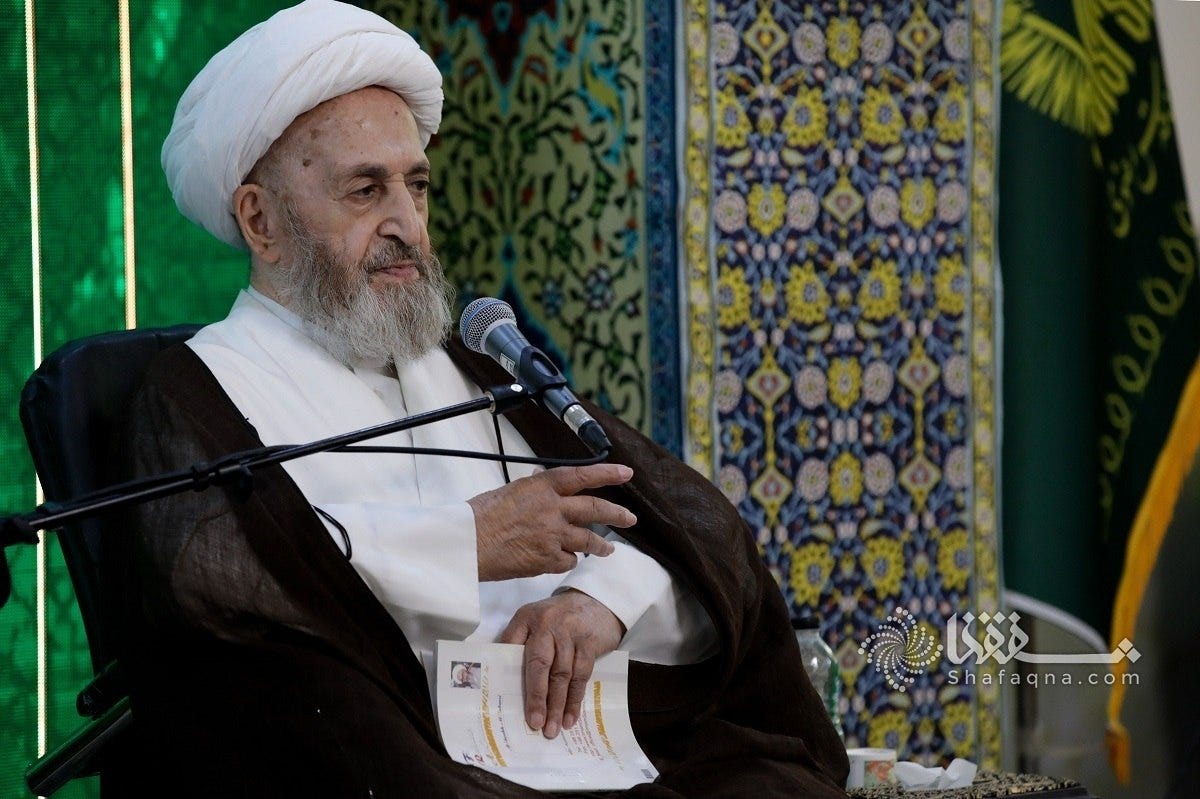
Grand Ayatollah Jafar Subhani, speaking at the opening ceremony of the new academic year at the Imam Sadiq (AS) Institute, highlighted the indispensable role of Kalam (Islamic theology) and divine philosophy in contemporary Islamic scholarship. He stressed that without a robust theological foundation, achieving a profound understanding of the Quran or providing reasoned answers to modern ideological questions is impossible.
The Supreme Value of Theology and Philosophy
The value of any science is primarily determined by its subject matter. While chemists study the properties of substances and botanists study plants, there are sciences whose subject is existence itself: the existence of God, His divine attributes, the structure and levels of existence, and the fundamental questions of faith.
Because of this, Kalam and divine philosophy occupy a uniquely elevated place among the sciences. In fact, Kalam is often referred to as Fiqh al-Akbar (the “Great Jurisprudence”) because it serves as the very bedrock of the religious sciences. Just as a building cannot stand without a solid foundation, religious knowledge relies entirely on a firm foundation of faith and theology.
Bridging Quranic Concepts with Reason
In the Shia scientific tradition, Kalam is deeply intertwined with philosophy. Ayatollah Subhani noted that without mastering these disciplines, correctly grasping certain Quranic concepts becomes exceedingly difficult.
To illustrate this, he cited verses that speak of God’s “closeness” to humanity and His “presence” among people. At the same time, core Islamic doctrine asserts that God is not a physical body, does not occupy a specific spatial location, and is not limited by direction or time. How, then, should believers understand the Quranic descriptions of His closeness?
The precise, nuanced answers to such profound questions are found within the frameworks of Kalam and philosophy. Therefore, anyone seeking a deep, accurate understanding of the Quran’s meanings must be well-versed in the fundamentals of these sciences.
Countering Modern Scepticism
Ayatollah Subhani also issued a stark warning against complacency, cautioning against the mistaken belief that intellectual attacks on religious foundations are a relic of the past.
“Do not think that attacks on the foundations of faith and theology have ended,” he urged. “These doubts continue to exist and, from time to time, reappear.”
He identified Kalam and divine philosophy as the primary tools for countering atheistic and ideological doubts. Today’s challenges extend beyond mere questions of faith, touching upon religious precepts, ethics, and various other areas of Islamic knowledge.
Following the Legacy of Imam Sadiq (AS)
As a historical precedent, the Grand Ayatollah pointed to the legacy of Imam Sadiq (AS), who purposefully trained a generation of students capable of engaging in high-level intellectual discussions and providing reasoned arguments to defend the foundations of Islam. Among his most prominent students was the renowned theologian Hisham ibn Hakam, who famously participated in rigorous debates with representatives of various philosophical and religious schools.
A Call to Seminaries and Students
Drawing on this rich history, Ayatollah Subhani stressed that this principle is just as relevant today. It is impossible to answer modern doubts without specialised knowledge and sound, logical arguments.
He called upon spiritual and educational centres (seminaries) to actively train specialists across various fields of theology and philosophy. Concluding his address, he urged students to dedicate themselves seriously to the study of Kalam and divine philosophy, emphasising that these sciences are vital for two primary missions: unlocking the deepest meanings of the Quran and mounting an intellectual defence of the foundations of the Islamic faith.