


The Danger Nobody Talks About
If you ask most people what the biggest spiritual dangers are, they’ll say things like pride, arrogance, addiction, and bad company. Very few people would say: feeling too comfortable.
But that is exactly what the fourth greater sin is about.
Al-Amn min Makrillah (الأمن من مكر الله) translates roughly as feeling completely safe from Allah’s plan — a total, relaxed disregard for the possibility that Allah’s punishment could ever actually reach you. It’s the spiritual state of someone who has convinced themselves — consciously or not — that they are simply fine. That consequences are for other people. That the warnings in the Quran are background noise.
And according to Ayatollah Dastaghaib Shirazi, this comfortable, carefree attitude is one of the most dangerous places a believer can find themselves.
How Is This Different From Having Hope in Allah?
This is the question we absolutely must answer — because at first glance, this sin might seem to contradict the last two articles. We just spent two whole articles telling you not to despair of Allah’s mercy. So now we’re saying don’t feel too safe either?
Yes. Exactly. And this is where Islamic spirituality shows its extraordinary precision.
In the last article on Qunut, we talked about the believer’s heart needing two wings — hope and fear — to fly. Yā’s and Qunut are the disease of having too little hope. Al-Amn min Makrillah is the disease of having too little fear.
Having hope in Allah’s mercy means: I have sinned, I am turning back, I trust that Allah will forgive me if I am sincere. That is beautiful. That is exactly right.
Al-Amn min Makrillah means something entirely different. It means: I can carry on sinning, cutting corners, skipping my obligations, living however I like — and it’ll all be fine. Allah is merciful. He won’t really punish me. I’ll sort it out later. Or He’ll just forgive me anyway.
That shift — from trusting in Allah’s mercy to exploiting it — is where this sin lives.
What Does the Quran Say?
The Quran addresses this directly — and in a way that should genuinely make us pause. In Surah al-A’raf, Chapter 7, The Elevated Places, Allah asks three questions in rapid succession that almost feel like a gentle shake of the shoulders:
“What! Do the people of the towns then feel secure from Our punishment coming to them by night while they are asleep?” (Verse 97)
“What! Do the people of the towns feel secure from Our punishment coming to them in the morning while they play?” (Verse 98)
“What! Do they feel secure from Allah’s plan? But none feels secure from Allah’s plan except the people who shall perish.” (Verse 99)
Three verses. Three questions. Each one stripping away a different layer of false security — in the night, in the morning, at play — until the final devastating verdict: none feels secure from Allah’s plan except those heading toward their own ruin.
This isn’t a threat designed to terrorise. It’s a wake-up call. Allah is essentially saying: the world you’re living in so comfortably — do you understand how easily it can change? Do you understand that comfort itself can become a trap?

What Did the Ahlul Bayt (AS) Teach Us?
Imam Ja’far as-Sadiq (AS), Imam Musa al-Kadhim (AS), and Imam Ali al-Ridha (AS) all classified the fearlessness of Allah’s punishment among the Greater Sins. This consistency across multiple Imams tells us how seriously the Ahlul Bayt regarded this spiritual disease.
But there’s a concept in Ayatollah Dastaghaib Shirazi’s discussion of this sin that is genuinely one of the most thought-provoking ideas in the entire book. It’s called Istidraj.
Istidraj literally means being drawn closer gradually — but in this context, it describes something almost counterintuitive. It refers to the situation where Allah continues to bless a person who is sinning — giving them health, wealth, success, comfort — not as a reward, but as a test. And the person, rather than feeling ashamed and returning to Allah, interprets the continued blessings as a sign that everything is fine. That Allah is pleased with them. That their sins aren’t really that serious.
Ayatollah Dastaghaib Shirazi explains it this way: at times, the respite granted by Allah also includes new blessings. Allah bestows bounties upon a person who has sinned so that they may feel ashamed and make amends. Instead, the person often develops confidence and blatantly commits more sins — living blissfully in a world of material comfort, not realising they are fettered by their sins.
Think about how subtle and how sobering that is. The very blessings in your life could be the test. The question isn’t am I being blessed — it’s what am I doing with those blessings?
The Respite Is Real — But It Ends
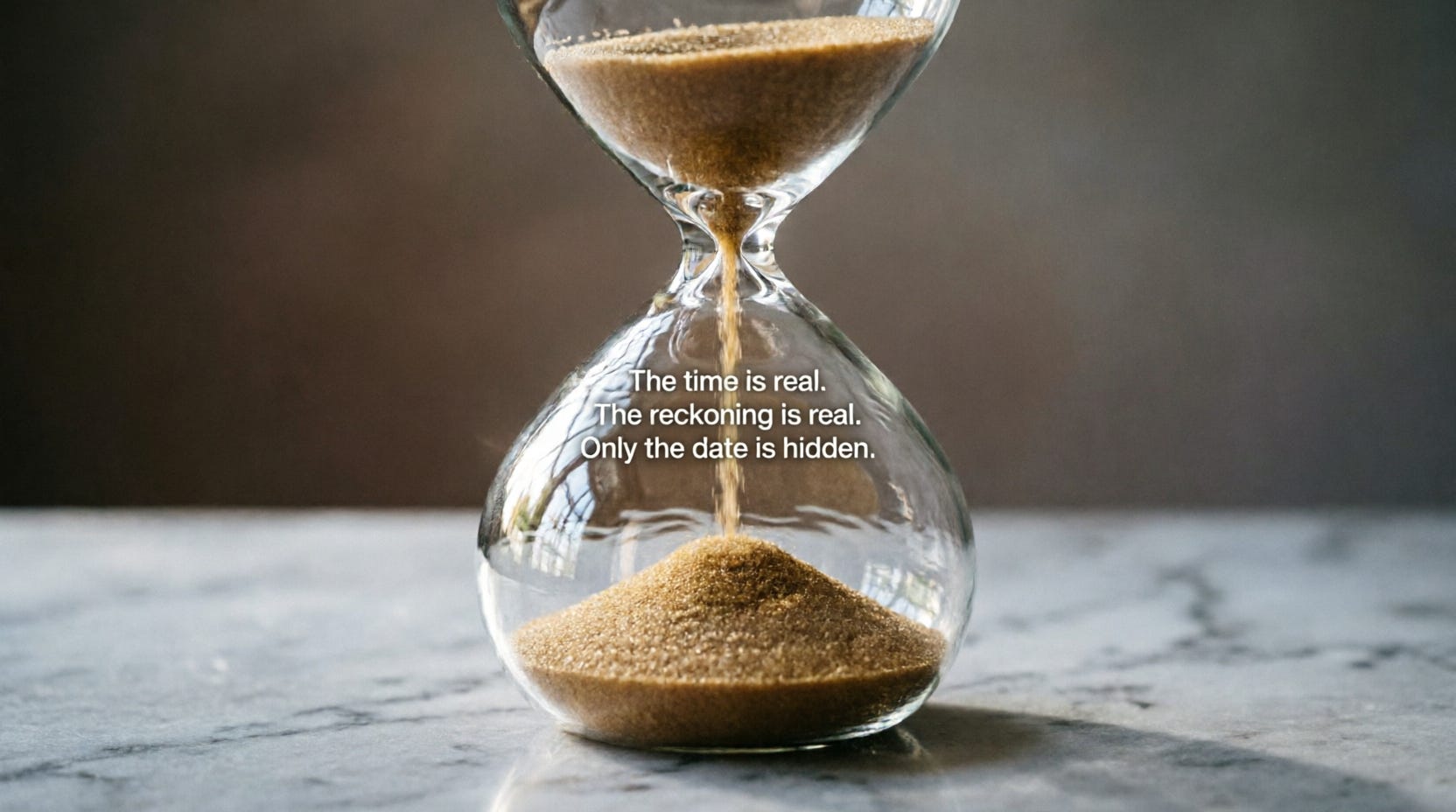
One of the most important concepts Ayatollah Dastaghaib Shirazi discusses here is Imla — Allah’s respite. This is the time Allah gives every single person — the space to reflect, to turn back, to repent.
Allah says in the Quran: “And if Allah had destroyed people for their inequity, He would not leave on the earth a single creature, but He respites them till an appointed time.”
That word — appointed time — is the part we tend to forget. The respite is real, and it is generous. But it is not infinite. And the person suffering from Al-Amn min Makrillah is the one who takes the respite as a permanent guarantee.
Imam Ali (AS) said something in Nahj al-Balagha that cuts right to the heart of this: “The most I fear for you is two things — following desires and having long hopes.” Long hopes — the assumption that there is always more time, always tomorrow, always later — is one of Shaytan’s most effective tools. It keeps people comfortable in the present while their account with Allah quietly accumulates.
What Does This Look Like in Real Life?
Because this sin is so subtle, it’s worth naming some of the ways it actually shows up in everyday life. See if any of these sound familiar:
“I’ll repent when I’m older.”:
This is perhaps the most common form. The assumption that youth is a free pass — that the serious spiritual accounting begins at some later, more convenient stage of life. But nobody is guaranteed tomorrow, let alone old age.
“I pray, and fast, so I’ll be fine.”:
Worship is beautiful and essential. But it can sometimes create a false sense of spiritual security — a sense that one’s obligations are ticked off and therefore one can be lax in other areas. This is the person who prays five times but has no hesitation in cheating in business, or hurting people with their tongue, or ignoring their family’s rights.
“Allah knows my heart.”:
This phrase is true — Allah absolutely knows your heart. But it is often used to justify abandoning actions. My heart is good becomes a reason not to pray, not to wear hijab, not to fulfil obligations. The Ahlul Bayt were clear — the heart and the action must work together.
“Surely people worse than me go to Jannah.”:
Comparing yourself to people you perceive as worse is a trap. Your account on the Day of Judgement will be your own. Not a comparison. Not a ranking. Yours alone.
Fear and Hope — The Believer’s Compass
Ayatollah Dastaghaib Shirazi is emphatic that the correct spiritual state is always a balance. Fear and hope are the signs of true ma’refat — deep knowledge of Allah. And both speech and action should be guarded by this divine combination of fear and hope.
Imam Ja’far as-Sadiq (AS) described it beautifully: “The believer is between two fears — the sin that has passed and whether Allah has forgiven it, and the time that remains and whether they will be able to keep straight in it.” Not paralysed by that fear. Not crushed by it. Just awake to it. Present. Careful. Conscious.
There’s a dua that Imam Ali al-Sajjad (AS) teaches in Sahifa Sajjadiyya where he asks Allah: “Give me such a life that my long life is spent in obedience to You. And when my life becomes a field for Shaytan, take away my soul toward You before I become eligible for Divine retribution.”
That is not the prayer of someone who feels carelessly safe. That is the prayer of someone beautifully awake — asking for protection not just from punishment, but from the very states that make punishment possible.
How Do We Protect Ourselves From This Sin?
Regularly revisit the Quran’s warnings
Not to become anxious or depressed — but to stay awake. The stories of the nations that were destroyed, the descriptions of the Day of Judgement, the reminders of accountability — these aren’t horror stories. They are the most merciful thing Allah could give us — a map that shows us where the cliffs are.
Take your minor sins seriously
One of the hallmarks of Al-Amn min Makrillah is brushing off small sins. “It’s nothing big.” But Imam Ali (AS) warned: don’t look at how small the sin is — look at how great is the One you are sinning against.
Ask yourself honestly — am I delaying tawbah?
Not because you don’t believe in Allah’s forgiveness, but because some part of you thinks there’s time. That is the moment to stop. Make tawbah now. Not tomorrow. Now!
Reflect on the blessings in your life
And ask genuinely — am I being drawn closer to Allah through these, or further away? Are they making me more grateful, more obedient, more humble — or more comfortable, more distracted, more attached to this world?
A Closing Thought
The first three greater sins in this series all involved a kind of disconnection from Allah — placing others beside Him, despairing of His mercy, giving up entirely. This fourth sin is different in a fascinating way. The person suffering from Al-Amn min Makrillah hasn’t necessarily given up on Allah. They might even think of themselves as a believer. They just aren’t taking Him seriously enough.
And that — the slow, comfortable drift from genuine consciousness of Allah into a kind of pleasant heedlessness — might be the most common spiritual condition of our time.
The antidote isn’t fear for the sake of fear. It’s wakefulness. The kind of wakefulness that says: this life is real, this account is real, this moment matters — and I want to meet Allah in the best state I possibly can.
May Allah keep our hearts awake — neither crushed by despair nor lulled into heedlessness. May He grant us the balance of hope and fear that keeps us always moving, always turning, always returning to Him. Ameen.