


We often judge the worth of our days by what we physically accomplish—the tasks finished, the charity given, the prayers offered. Yet, in the profound ethical teachings of Islam, the weight of a deed is not found in its outer form, but in its inner spirit. As Grand Ayatollah Javadi Amoli reminds us, the intention (Niyyah) is the very soul of action. Without it, the body of our deeds is lifeless.
The Two Pillars of a Righteous Act To seek nearness to the Divine, it is not enough to simply “do good.” A true act of devotion must satisfy two rigorous conditions. First, it requires Actual Goodness: the action itself must be inherently virtuous and permissible. Second, and far more difficult to secure, is Active Goodness. This refers to the purity of the doer’s motivation. The heart must be stripped of all other desires, leaving only the sincere wish to approach God.
This is why the intention of a believer is often described as superior to the action itself. The physical act is limited by time and ability, but the sincere intention is a boundless movement of the spirit.
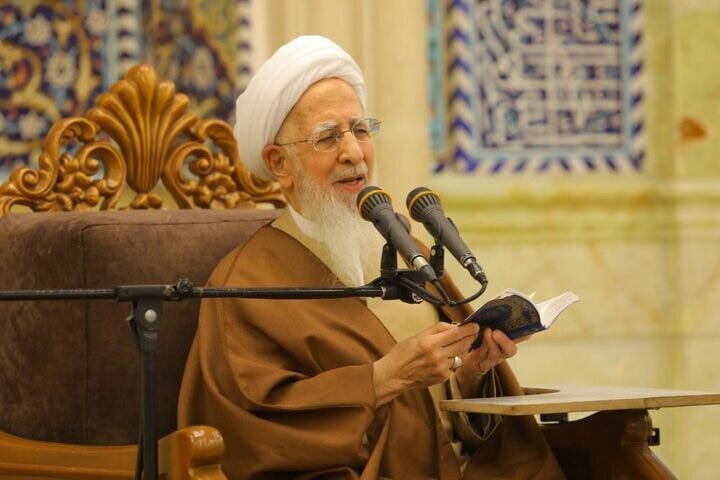
The Chameleon Nature of Hypocrisy The path to sincerity is mined with traps, many of which are invisible to the naked eye. We typically recognise hypocrisy when someone performs a good deed loudly to garner applause. However, Ayatollah Javadi Amoli warns of a far more dangerous, “mysterious” hypocrisy.
Consider the person who deliberately hides their good deeds. On the surface, this looks like humility. But if the goal of hiding the deed is so that people will say, “Look how humble they are,” the trap has been sprung. Whether seeking fame for generosity or fame for humility, the result is the same: the ego is being fed, not starved.
Satan’s Tailored Deceptions The deception of the self is not a blunt instrument; it is a tailored suit. Satan does not deceive everyone in the same way. He studies the individual.
To the vain, he whispers, “Show them your virtue.”
To the fearful, he whispers, “Hide your virtue, or they will call you a hypocrite.”
This latter trick is perhaps the most cunning. A person might be on the verge of doing a good deed, only to stop because they fear the judgment of others. They think they are fleeing hypocrisy, but by allowing the opinions of people to dictate their actions—even by not acting—they have fallen into the very trap they sought to avoid.
The Struggle for Purity “The best deeds are those that are best preserved.” Safeguarding an action from the moment of inception to its completion is a grueling task. It requires a constant vigilance of the heart to ensure that our worship and our service remain free from the subtle contaminations of the ego.
Ultimately, the journey toward sincerity is the highest form of struggle. It is the realisation that while anyone can perform the motions of goodness, only the vigilant heart can offer them up purely to God.
Reference: ABNA