

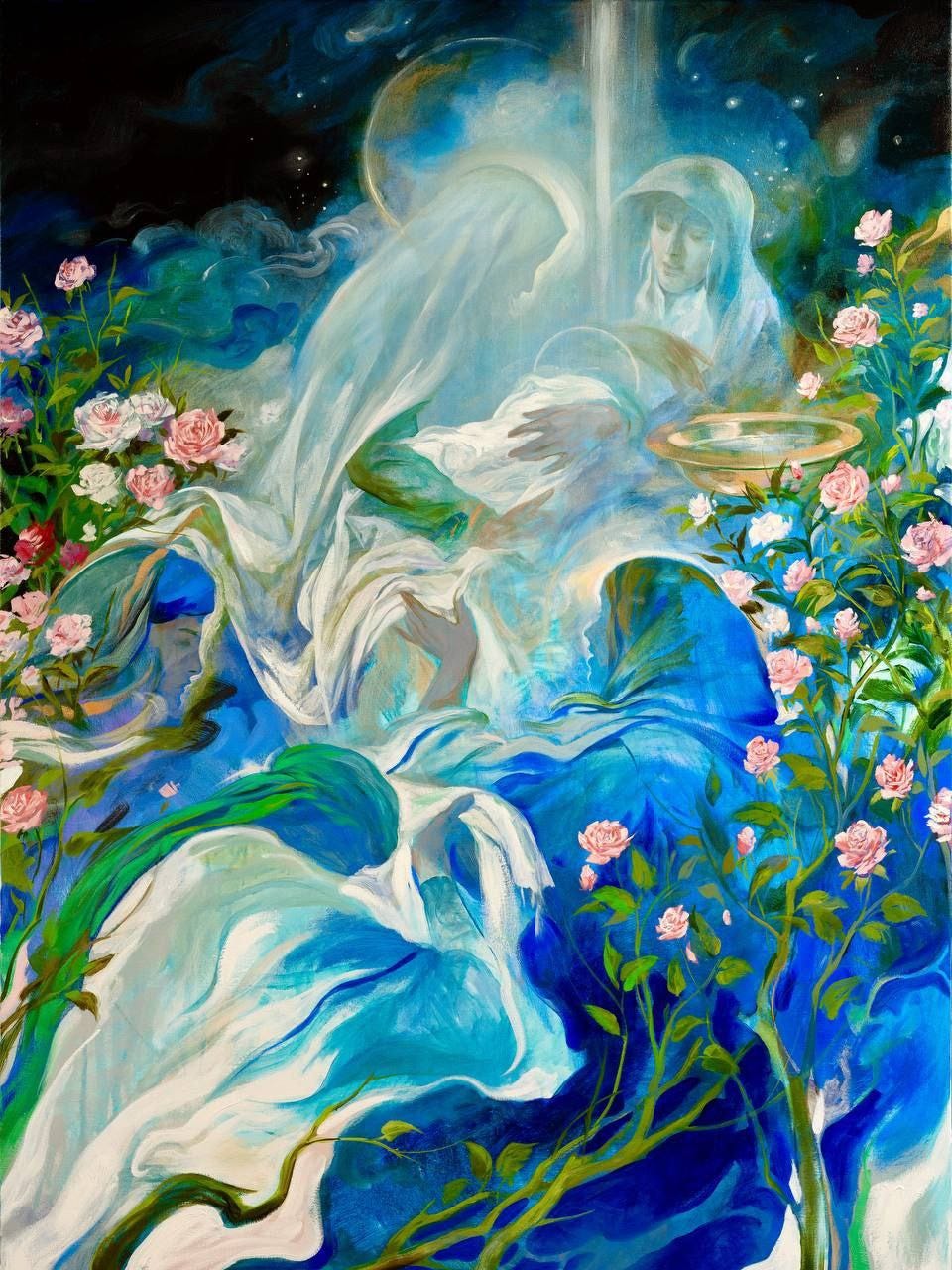
A Birth of Light In the heart of Mecca, amidst the spiritual awakening of early Islam, a child was born who would become the very soul of her father’s mission. On the 20th of Jumada al-Thani, the household of the Prophet Muhammad (PBUH) and Lady Khadija (AS) was illuminated by the birth of Fatima (AS). She was not merely a daughter but a divine gift, bestowing upon the Prophet the lineage that would carry his legacy forward. Known as Al-Zahra (The Radiant) and Al-Batul (The Pure), her presence was a source of immense comfort to her father, earning her the tender title Umm Abiha—”the Mother of her Father.”
A Divine Lineage and Early Struggles Lady Fatima’s childhood was woven with the threads of tribulation and faith. Growing up during the harsh boycotts against the Banu Hashim in the Shi’b Abi Talib, she witnessed firsthand the sacrifices made for the nascent faith. The loss of her beloved mother, Lady Khadija, and her father’s protector, Abu Talib, at a tender age forged in her a spirit of resilience that would define her life. She stood as a pillar of strength for the Prophet, tending to him through the cruelty of the Meccan polytheists and the trials of migration to Medina.
The Union of Two Lights When the time came for marriage, many of the wealthy and powerful sought her hand, but the Prophet turned them away, declaring that her marriage was a “heavenly ordainment.” It was only Ali ibn Abi Talib (AS)—the Prophet’s cousin and staunchest defender—who possessed the spiritual standing to be her match. Their union was not built on material wealth; her dowry was modest, funded by the sale of Imam Ali’s armor. Yet, their marriage remains the gold standard of Islamic family life, founded on deep love, mutual respect, and shared devotion to God.
A Life of Simplicity and Grace Despite her exalted status as the “Mistress of the Women of the Worlds,” Lady Fatima lived a life of profound simplicity. History records her blistered hands from the handmill and her weary shoulders from carrying water, yet she never complained. Instead, she found solace in the Tasbih taught to her by the Prophet—a litany of praise that remains a staple of Muslim worship today. Her home was a sanctuary where the hungry were fed, even when her own family had little to eat, embodying the Quranic verses of selflessness and charity.
The Enduring Legacy Lady Fatima’s influence extends far beyond her brief life. She was the mother of Imams Hasan and Husayn, and Lady Zaynab, raising leaders who would safeguard the essence of Islam. Her spiritual status is enshrined in the Holy Quran, notably in the Verse of Purification and the Verse of Mubahala, highlighting her purity and her pivotal role in the faith.
Though her life was marked by the tragic events following the Prophet’s demise—including the defense of her husband’s rights and the sorrowful sermon of Fadak—her legacy is not one of defeat, but of unyielding principle. Today, her birth anniversary is celebrated not just as a remembrance of a historical figure, but as Mother’s Day in many cultures, honoring her as the ultimate archetype of womanhood, spirituality, and maternal grace.
Tehran’s Azadi Tower lit up in a special tribute marking Lady Fatimah Zahra’s (SA) birth anniversary and Iran’s Women’s and Mothers’ Day.
An Imam Reza shrine servant was seen offering roses to men to surprise their wives on Lady Fatimah Zahra’s (SA) birth anniversary, marked as Mother’s Day in Iran.