

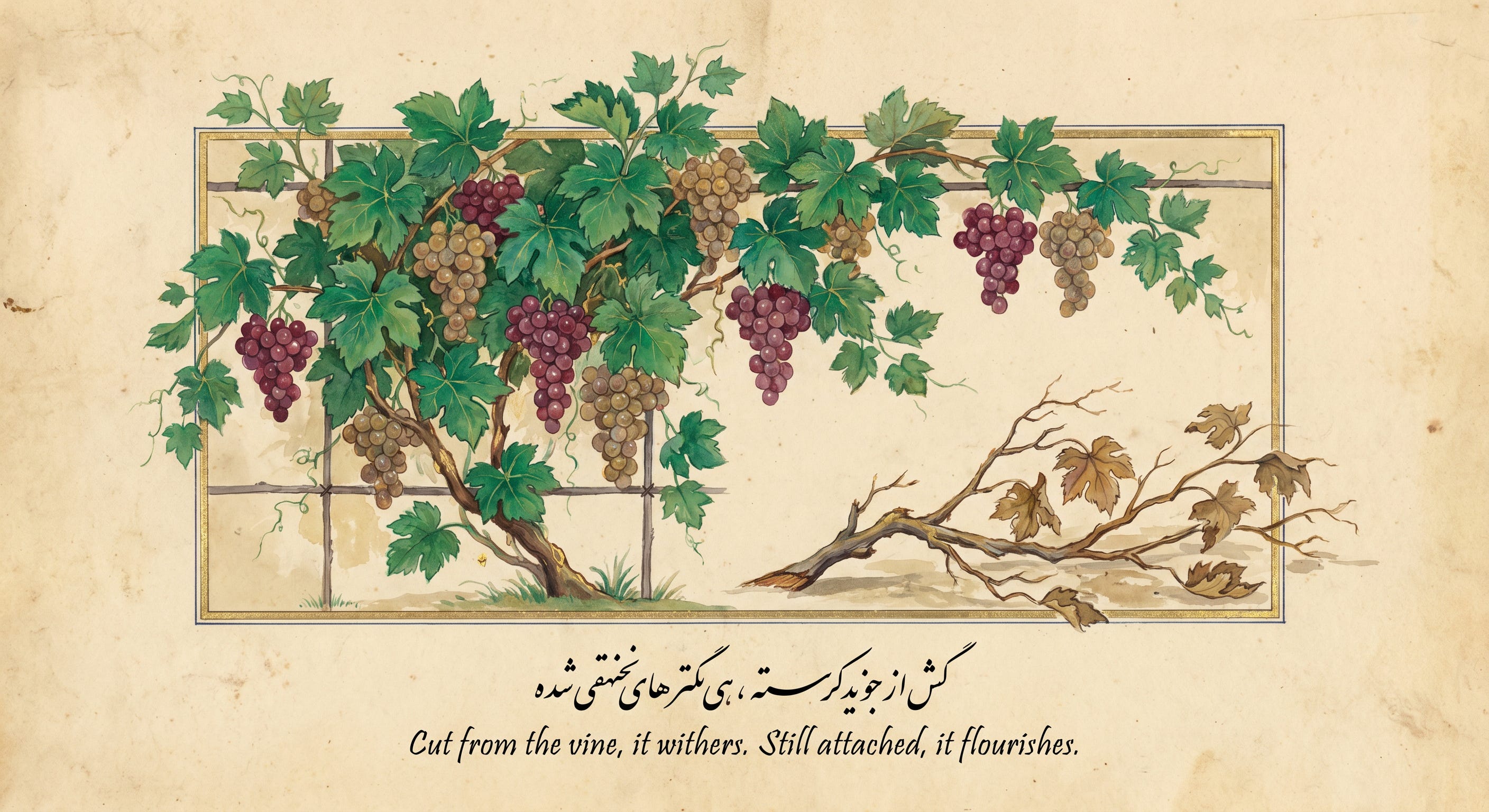
The Argument That Never Got Resolved
You probably know exactly what this article is about before you’ve even read a word of it.
The cousin you haven’t spoken to in three years. The sibling whose number you scroll past. The uncle who said something unforgivable at a wedding. The aunt who took sides when she shouldn’t have. The family WhatsApp group you left — or perhaps never joined at all.
We all have one. A severed thread. A relationship that used to exist and now simply… doesn’t. And most of us have quietly made peace with it, telling ourselves it’s fine, it’s their fault, they started it, life is easier without the drama.
But Islam has a name for that silence. And it calls it one of the seven greatest sins a person can commit.
Qat’a ar-Rahm — the severing of ties of kinship. And the more you understand what it means, the harder it becomes to stay comfortable with it.
What Does Qat’a ar-Rahm Mean?
The word Rahm (رحم) in Arabic carries two deeply connected meanings. It means womb — the place of origin, of family, of blood connection. And it shares its root with Rahman — the Most Merciful — one of Allah’s most beautiful names.
This is not a coincidence. Allah Himself drew the connection. In a sacred hadith reported across both Shia and Sunni sources, Allah says: “I am the Rahman. I created Ar-Rahm, and I derived its name from My own name. Whoever keeps good ties with it, I will keep good ties with them. And whoever severs it — I will sever My connection with them.”
Pause on that. The ties of kinship are so sacred that Allah linked them directly to His own name and His own mercy. To sever family ties is not just a social problem or a personal choice. It is, in the most literal sense, cutting yourself off from the Rahman.
The seventh greater sin is Qat’a ar-Rahm — the breaking of relations with one’s kith and kin. This is clearly confirmed as a greater sin by Imam Ja’far as-Sadiq (AS), Imam Musa al-Kadhim (AS), Imam Ali al-Ridha (AS), and Imam Muhammad al-Taqi (AS). And the Quran itself decrees Hell-fire and the curse of Allah upon those who cut off ties with their relatives.
Four separate Imams. The Quran itself. The message is consistent and unambiguous.
What the Quran Says — And It Says It Three Times
Imam Ja’far as-Sadiq (AS) made a remarkable statement about this sin. He said: “Beware of those who cut off relations — because I have found them cursed thrice in the Quran.”
Three separate places in the Book of Allah where this sin is directly condemned. One of the most striking is Surah Muhammad, Chapter 47, Verses 22-23):
“So would you perhaps, if you turned away, cause corruption in the land and sever your ties of kinship? Those are the ones Allah has cursed, so He deafened them and blinded their eyes.”
Cursed. Deafened. Blinded. These are not gentle words. They describe a person whose spiritual senses have been dulled — who can no longer hear the truth clearly or see reality as it is. And the cause? Severing family ties.
There is a profound wisdom here. When we hold grudges, when we nurse old wounds and use them to justify cutting people off, something happens to our perception. We stop being able to see our relatives as full human beings. We hear only what confirms our grievance. We become, in a very real sense, spiritually deaf and blind to the humanity of the people we share blood with.
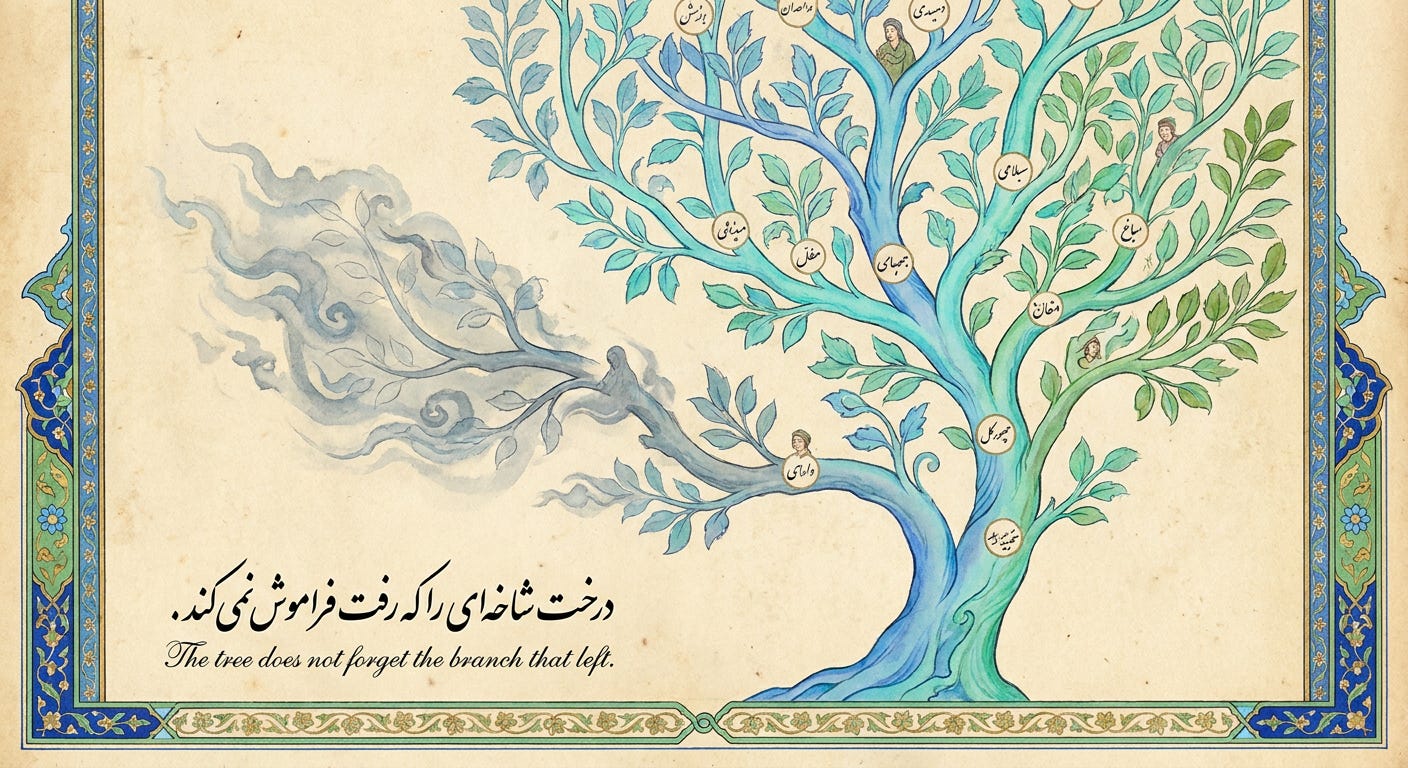
The Consequences That Hit in This World
One of the things that makes Qat’a ar-Rahm so striking is how immediately and practically it affects this life, not just the next.
Those who sever ties with relatives face detrimental consequences in this world: destruction of their faith, ruin in the hereafter, lessening of their lifespan, diminution in sustenance, and worst of all, the termination of Divine grace and favour upon them.
Less sustenance. A shorter life. These are not vague spiritual threats — they are specific, worldly consequences that the Ahlul Bayt tied directly to this sin.
The traditions tell us that families who quarrel and sever ties find that Allah removes the bounty from their sustenance and their lifespans shorten — even if they are otherwise pious in other respects.
That last part is stunning. Even if they are otherwise pious. Even if they pray, fast, pay khums, attend majlis, the severing of family ties can undo the barakah of all of it. It is a sin that punches through other acts of worship and neutralises their blessings.
And there is the moving account from Imam as-Sadiq (AS) of a man whose relatives had been making his life unbearable — crowding him into a single room of his own house, threatening to take his wealth if he complained. The Imam told him to be patient and maintain the ties anyway. Some time later, those relatives died. The Imam said: “They died as a result of the difficulties they subjected you to — a punishment for severing the bonds of relationship.”
The consequences are real. They arrive in this world. Often sooner than we expect.
The Question Everyone Wants to Ask
Here is the conversation Ayatollah Dastaghaib Shirazi includes that will resonate with almost every reader.
A companion named Abdullah ibn Sinan came to Imam as-Sadiq (AS) with a very relatable problem. He said, “I have a cousin. I try to maintain good relations with him and have no wish to break ties. But he wants to break ties with me. I want to maintain relations, but he wishes to sever them. Due to his behaviour, I am also inclined to cut ties with him. Can you permit me to do so?”
You can almost hear the exhaustion in his voice. I’ve tried. He’s the problem. Can I just give up now?
The Imam’s response was firm and beautiful at the same time. “If you continue to behave kindly toward this relative despite his Qat’a ar-Rahm, then the mercy of Allah will be upon both of you. But if you break ties with him, then neither of you will be eligible for the mercy of Allah.”
Neither of you. The one who started it and the one who responded in kind. The mercy is conditional on someone being willing to keep the door open — regardless of who shut it first.
This is perhaps the most challenging teaching in this entire chapter. Islam does not give us permission to match cruelty with cruelty within the family. It asks us to be the one who keeps reaching out — not endlessly absorbing harm, but refusing to let the thread break entirely.
What Is the Minimum? What Does Silat ar-Rahm Actually Require?
Many people wonder — what counts as maintaining ties? Do I have to be close friends with every relative? Do I have to attend every family gathering? Do I have to pretend old hurts don’t exist?
The scholars are merciful in their answer. Silat ar-Rahm — maintaining the ties of kinship — does not require deep friendship or constant contact. It requires that the thread not be cut. That you do not actively sever the connection. That you greet them. That you do not leave them in hardship without acknowledging it. That you do not let months and years pass in deliberate, hostile silence.
The bare minimum — a greeting, a phone call, a text on Eid — is enough to keep the sin of Qat’a ar-Rahm at bay. The more you give, the more blessed your life becomes. But even the smallest gesture of acknowledgment keeps the thread alive.
And here is a beautiful, encouraging teaching: the one who maintains ties even with a relative who has severed them is described in the hadith as doing something even more precious than simply maintaining mutual kindship. The Prophet (S) was asked: “What if I try to maintain ties but they cut me off?” He replied: “Then you are not merely maintaining ties — you are preventing them from being severed entirely. And Allah will always be your helper in this.”
You are not just being kind. You are holding the entire relationship together by yourself. And Allah sees it.
The Spiritual Dimension — Rahm and Rahman
Let’s return to that extraordinary linguistic connection between Rahm (womb, kinship) and Rahman (the Most Merciful). It is one of the most beautiful insights in all of Islamic spirituality.
In a divine hadith, Allah says: “I am the Rahman. Whoever severs ties with their relatives — I shall sever My relation with them.”
The implication works in both directions. When you maintain your family ties — especially when it is difficult, especially when you have been wronged — you are participating in something Divine. You are reflecting, in a small human way, the quality of Allah’s own mercy. His mercy does not stop flowing because we are unworthy. His mercy does not withdraw because we have hurt Him through our sins. It keeps reaching, keeps opening the door, keeps offering connection.
When we do the same with our relatives — keep reaching despite the silence, keep the door open despite the hurt — we are living out a reflection of the Rahman in our own lives.
And when we sever those ties, we are, in a very real sense, cutting ourselves off from that quality entirely.
A Gentle Challenge Before You Move On
Before you read the next article in this series, take one small action.
Think of one person in your family — blood or extended — with whom the connection has gone cold. Not necessarily a dramatic falling out. Maybe just a drift. A silence that grew comfortable. A thread that frayed without either of you really noticing.
Send them a message. It doesn’t need to be long. It doesn’t need to address the history. Just: “I was thinking of you. I hope you’re well.”
That’s it. That’s Silat ar-Rahm. That small act, done sincerely, carries the weight of something deeply beloved by Allah — so much so that He named it after Himself.
The Rahman loves the Rahm. And the Rahman is watching every small, quiet, brave attempt to keep the family thread alive.
May Allah mend what has been broken in our families. May He soften the hearts that have hardened toward one another. And may He make us the ones who reach first — always — because we understand what is at stake. Ameen.