

The following is adapted from a recent address by Hujjatul Islam Hamid Kashani, presented in his own voice.
I have no wish even to let his name pass my lips. But the American president said one thing that, to my mind, touches on Imam Husayn (AS), and so I will speak of it.
He said the blockade mattered more than the war itself — which is to say that the military assault did not achieve what it was meant to achieve. He was speaking of the naval blockade. Without an agreement, he warned, there would be an economic crisis in the world, because it would be impossible to open the Strait of Hormuz.
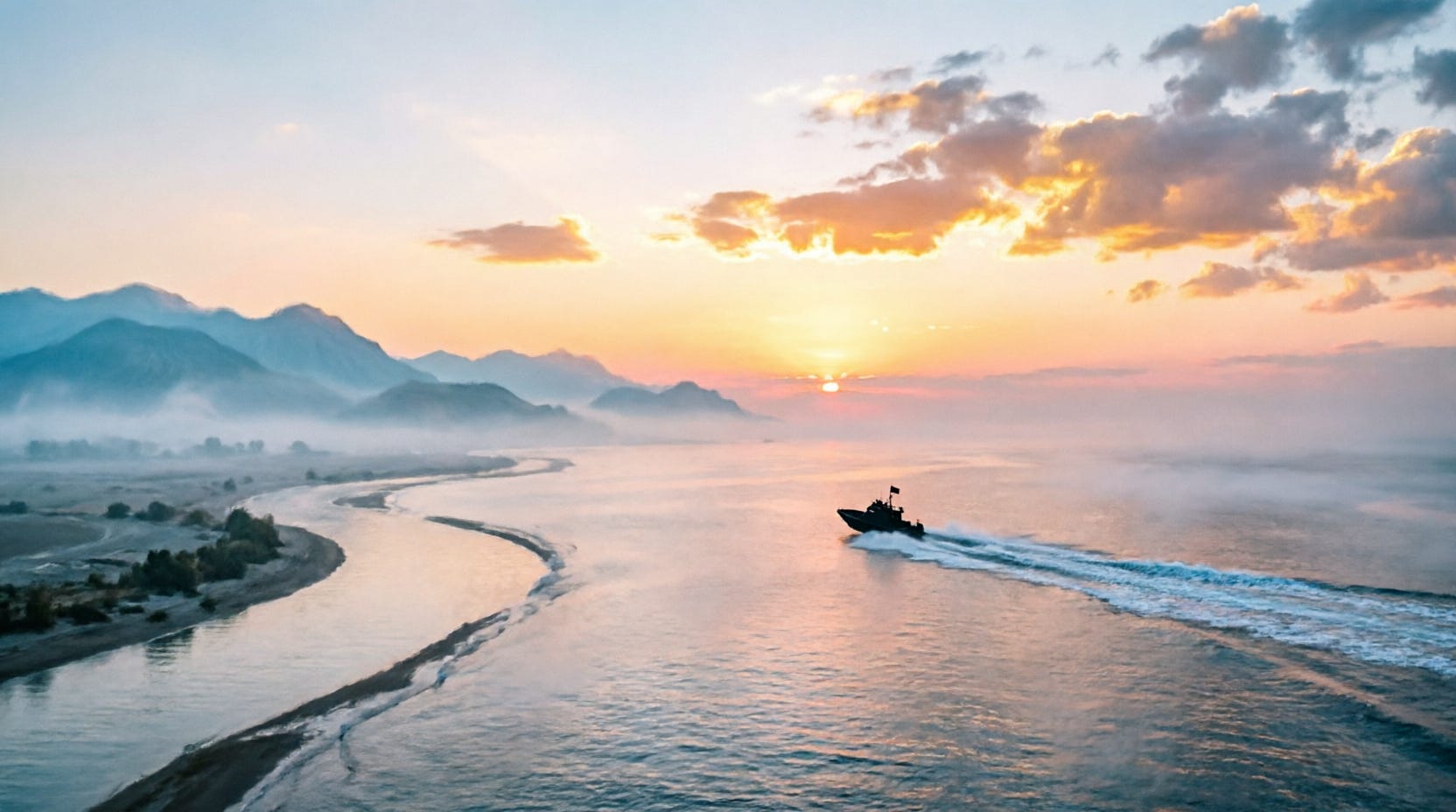
Consider what that admission means. Our young men, going out in these small fast boats under the threat of shelling and explosions — knowing they might leave their children fatherless — stood so firm that the enemy, an empire whose military power has scarcely an equal in all of history, was forced to concede: the Strait cannot be opened.
What made the narrow water narrow
They call it a strait, but it was never truly so narrow. It was made narrow by the people of Husayn (AS) — people raised in the spirit of Ashura.
We have no great navy. We have a few fast boats. And a fast boat is not merely a piece of equipment; it is a person willing to give his life. Why do other nations not fight this way? Not because they cannot build such boats — America, with all its capability, could build them easily. The question is not who can build the boat. The question is who will ride it.
Who is the man who climbs aboard such a vessel? He is someone who cannot hold back his tears when he hears the name of Imam Hussein (a). That is the power of Karbala: it makes people braver, it raises them up, it turns ordinary men into great ones. And this is among the wonders of Karbala — that it is singular and unrepeatable, and yet its spirit can spread and be reborn in others.
Following the path, not claiming the peak
I do not say that any event can be compared to Karbala. Our struggle with America is not Karbala, for we are not Imam Husayn (AS) and his companions. But it is a continuation of his path. He is the summit; we walk far below, trying only to follow his example, to draw its lessons, and to strive toward that ideal.
A person becomes brave precisely because he has seen Karbala and understood its meaning.
It is worth going to the south of Iran to see these fast boats with your own eyes — how they move, how fast they go — and to ask yourself whether it is a simple thing to decide to board one. Set aside the enemy’s drones and missiles altogether: the courage it takes merely to climb aboard is immense.
Karbala in itself is a wonder. But from it, too, an example can be drawn — and each person, according to his own capacity, can come to feel this same love and devotion.