

The Most Socially Acceptable Sin on This Entire List
Here is something worth pausing on before we begin.
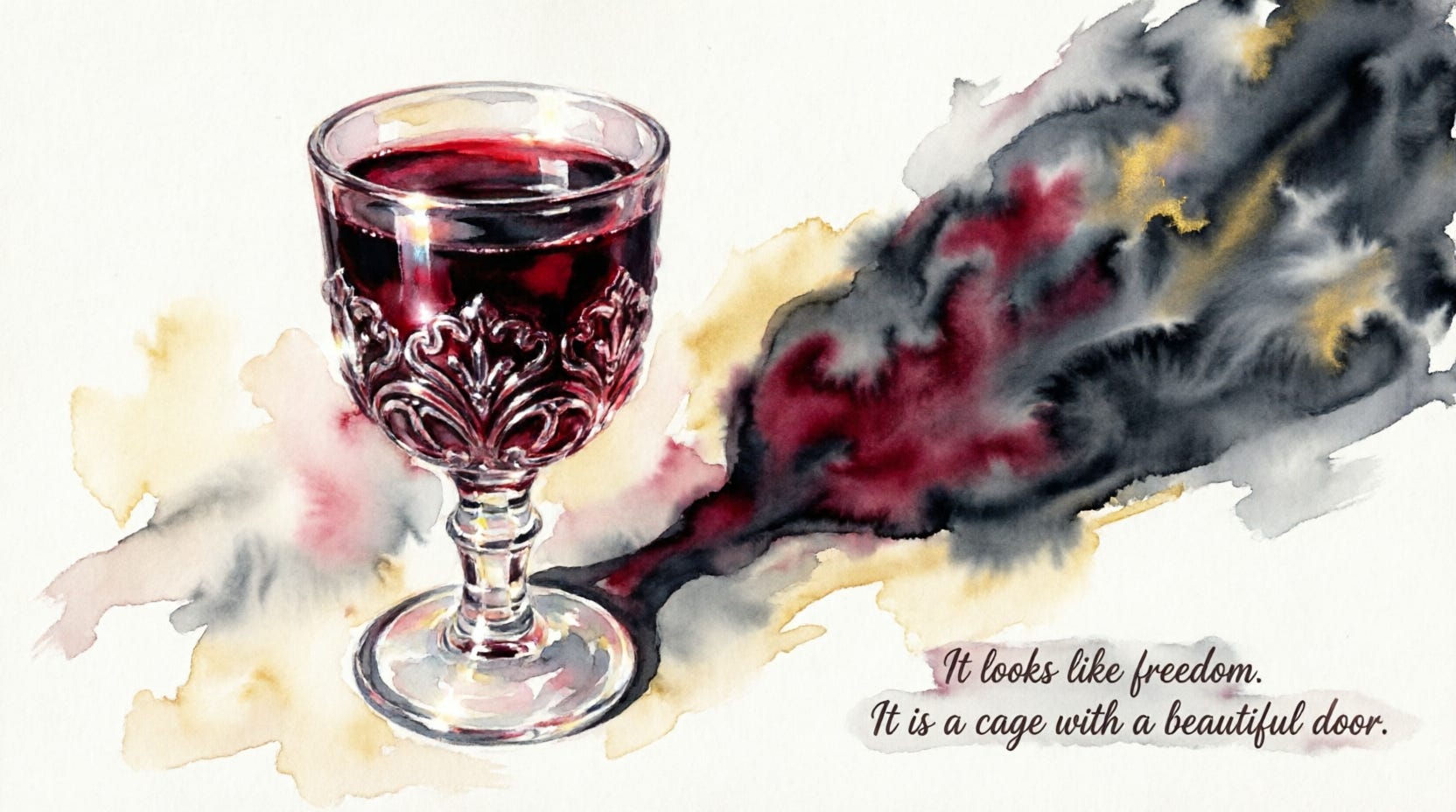
Of all the greater sins we have covered so far — Shirk, murder, sodomy, false accusation, usurping orphans’ property — drinking alcohol is probably the one that would raise the fewest eyebrows at a dinner party in modern Britain. You can walk into any supermarket and buy it. It is advertised on billboards, celebrated at weddings, offered at business lunches, and woven so deeply into the fabric of British social life that declining it often requires an explanation.
And yet Islam — with complete consistency across the Quran, the Prophet (S), and every single one of the Ahlul Bayt (AS) — placed the drinking of alcohol among the gravest sins a human being can commit.
Not as a cultural preference. Not as an optional guideline. As a clear, firm, non-negotiable prohibition with consequences described in language that should make every Muslim sit up and pay attention.
The thirteenth among the greater sins is drinking liquor. Its seriousness is confirmed in the traditions of Imam Musa al-Kadhim (AS), Imam Ali al-Ridha (AS), and Imam Muhammad al-Taqi (AS).
The Quran’s Gradual But Absolute Prohibition
One of the most instructive aspects of Islam’s treatment of alcohol is how the prohibition arrived. It didn’t come all at once. It came in stages — and understanding those stages reveals the extraordinary wisdom of Allah in dealing with human beings.
First came a verse acknowledging that wine has both benefit and harm — but that the harm outweighs the benefit (Surah al-Baqarah, Chapter 2, The Cow, Verse 219). Then came a prohibition on praying while intoxicated (Surah an-Nisa, Chapter 4, The Women, Verse 43). And finally — the complete, absolute, unambiguous prohibition in Surah al-Ma’ida, Chapter 5, The Table Spread, Verse 90-91):
“O you who believe — indeed, intoxicants, gambling, sacrificing on stone altars, and divining arrows are but defilement from the work of Shaytan — so avoid it, that you may be successful. Shaytan only wants to cause between you animosity and hatred through intoxicants and gambling, and to avert you from the remembrance of Allah and from prayer. So will you not desist?”
Notice what Allah names as Shaytan’s two goals with alcohol — animosity and hatred between people, and aversion from the remembrance of Allah and from prayer. Not simply personal harm. Social destruction and spiritual disconnection. These are the twin engines of alcohol’s damage, and they are as observable today as they were in seventh century Arabia.
The scholars note that the word used at the end — “So will you not desist?” — is remarkably gentle for a prohibition of this gravity. Allah is not commanding with a harsh ultimatum. He is almost appealing — surely now you understand? Surely you will stop? It is the tone of a merciful Creator who has just explained clearly why something is harmful and is now trusting His creation to make the right choice.
The Root of All Evils
Ayatollah Dastaghaib Shirazi includes one of the most striking descriptions of alcohol in all of Islamic literature — a narration that gives this sin its full context.
The Imam (AS) said: “Disobedience to the order of Allah is mostly due to alcoholism. The alcoholic abandons Salat. He even commits incest under the influence of alcohol. He loses his senses.”
Mostly due to alcoholism. This is not a casual observation. This is a statement about causation — about the relationship between alcohol and every other sin on this list. When the intellect is removed — when the barrier between impulse and action is dissolved by intoxication — every other prohibition becomes vulnerable.
The person who would never commit Zina while sober — might, while drunk. The person who would never say something unforgivable to their parents — might, while drunk. The person who would never gamble — might, while drunk. The person who would never make a financial decision that destroys their family — might, while drunk.
This is why the Ahlul Bayt called alcohol umm al-khabaith — the mother of all evils. Not because it is the worst sin in isolation, but because it gives birth to every other sin. It is the master key that unlocks doors that every other part of a person’s conscience and faith had kept firmly shut.
What the Ahlul Bayt (AS) Taught — And the Imagery Is Vivid
The traditions of the Ahlul Bayt on this subject are among the most viscerally powerful in all of Shia literature. They didn’t speak about alcohol abstractly. They painted pictures.
Imam Muhammad al-Baqir (AS) said: “On the Day of Qiyamat, the drunkard will come with a black face, a protruding tongue, and saliva dripping upon his chest.” And he will scream: “Thirst! Thirst!” And Allah will have the right to make him drink from the well that contains the pollutants of the adulterers.
The image is deliberately uncomfortable. The person who spent their life seeking pleasure in the glass arrives at the Day of Judgement bearing the visible marks of that choice — thirsty, undignified, their condition announcing to all what they chose in this world.
Another narration states: “Certainly, even if a person swallows only a mouthful of wine — at that very moment, the angels, the Prophets, and the righteous believers send their curses upon him. And when he drinks enough to become intoxicated, the spirit of belief leaves his body and is replaced by a dirty, accursed, devilish spirit.”
That last image — the spirit of belief departing and a devilish spirit taking its place — explains so much about what we observe in people under the influence of alcohol. The personality shifts. The inhibitions dissolve. The person becomes capable of things their sober self would be horrified by. Islam is saying: that is not simply a chemical process. Something spiritual is happening. The light of iman is temporarily extinguished and something darker fills the space.
And then this — perhaps the most sobering statement of all — the Holy Prophet (S) said:
“One who is careless of salat will be deprived of my intercession and will not be able to reach me at the pool of Kawthar. And by Allah — my intercession will also not reach the one who consumes intoxicants, and he will not be able to reach me at the pool of Kawthar.”
The pool of Kawthar — the river of abundance that the Prophet (S) will offer to his believers on the Day of Judgement. The Prophet is saying: I will be there. I will be waiting. But the one who consumed intoxicants will not be able to reach me. That is not a punishment imposed from outside. It is the natural consequence of the distance they created in this life.
The Ten People the Prophet Cursed
One of the most distinctive aspects of the Islamic prohibition on alcohol is how far it extends. It is not only the drinker who is implicated. The Prophet (S) specifically cursed ten categories of people in connection with wine — and the list is remarkable in its scope.
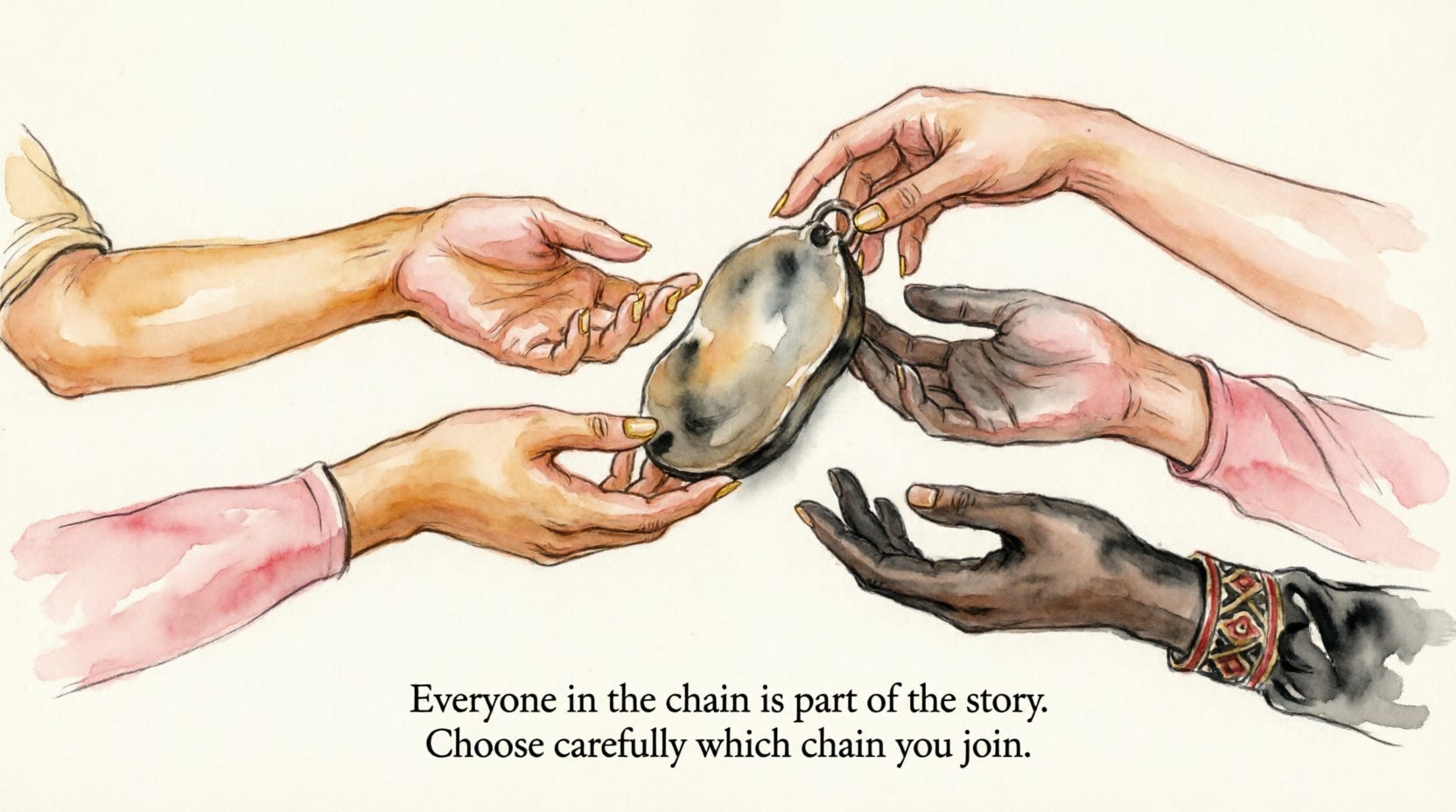
The one who plants the vine intending to produce wine. The one who presses the grapes. The one who drinks it. The one who carries it. The one it is carried to. The one who sells it. The one who buys it. The one who serves it. The one who serves it to others. And the one who consumes the money earned from it.
Ten people. The entire chain from grape to glass — every person who touches that chain with intention and knowledge is implicated. This is Islam’s way of saying: you cannot participate in the ecosystem of harm and claim innocence because you personally didn’t take the final step.
In a modern context — this principle deserves honest reflection. Working for a company whose primary product is alcohol. Managing a pub. Driving alcohol deliveries. Investing in alcohol stocks. Each of these sits somewhere on the chain the Prophet described.
The Intellect — The Most Sacred Gift
To truly understand why Islam treats alcohol with such seriousness, we need to understand how Islam views the human intellect — the ‘aql.
In Shia theology, the intellect is one of the most precious gifts Allah gave to humanity. It is the faculty that distinguishes us from animals. It is the instrument through which we recognise Allah, understand His commands, weigh our choices, and navigate our responsibilities. The Imams (AS) spoke about the ‘aql with extraordinary reverence — Imam Ali (AS) described it as “the foundation of the human being.”
Alcohol’s primary function is to impair the ‘aql. To fog it. To slow it. To gradually switch it off. And in doing so, it attacks the very thing that makes a human being a moral agent — capable of worship, capable of responsibility, capable of being held accountable before Allah.
This is why the Quran lists intoxicants alongside gambling, stone altars, and divining arrows — all things that, in their different ways, remove human agency and rational choice. They are all tools of Shaytan for precisely the same reason — they disable the faculty through which a person can choose Allah over their desires.
The Prophet (S) said: “Allah did not send any Prophet except that He took a covenant from them — that they would not drink intoxicants.” Not a single Prophet in all of human history. All of them — from Adam to Muhammad (S) — bound by this same covenant. This universal prohibition, cutting across every era and every nation, tells us that the harm of alcohol is not cultural or contextual. It is fundamental to what it means to be a human being in relationship with Allah.
What About Small Amounts? What About “Just One Drink”?
This is the question almost every Muslim living in the West encounters — whether from their own temptation or from the social pressure of non-Muslim colleagues, friends, and family.
The Islamic position, stated clearly and without ambiguity by the Ahlul Bayt, is that the prohibition is on the substance — not only on the amount that causes intoxication.
Imam Ja’far as-Sadiq (AS) was asked: “If a small amount does not intoxicate — is it permissible?” He replied: “No. The large amount that intoxicates — its small amount is also haram.”
The logic is simple and profound. The river and the puddle are both water. The ocean and the glass are both ocean. If the substance itself is prohibited — it is prohibited in every quantity. There is no Islamic concept of a safe amount of alcohol, a social amount, a one glass at dinner amount. The line is at the substance itself — not at the point of visible intoxication.
According to the traditions of the Ahlul Bayt, taking wine as medicine is also haram. The Ahlul Bayt have prohibited the consumption of any intoxicant as medicine. Allah has not placed any curative effect in any intoxicant.
This teaching addresses a common modern justification — that small amounts of wine are good for heart health, or that alcohol-based medications are necessary. The scholars offer important nuance: there are narrow exceptions in genuine medical emergency where no alternative exists — but these are genuine emergencies, not convenient justifications. And the general principle remains: the cure will not be found in what Allah has prohibited.
Living as a Non-Drinker in Britain
Let’s be practical for a moment — because for Muslims in Rochdale, Manchester, Birmingham, London, or anywhere else in Britain, this sin is not a theoretical concern. It is a daily social reality.
The office Christmas party. The colleague’s birthday. The work lunch where wine is poured automatically. The wedding of a non-Muslim friend. The family gathering where others drink freely. Navigating all of this with dignity, without judgment of others, without making every social occasion about your own religion, while firmly and quietly maintaining your own boundary — this requires real skill and real confidence.
A few principles from the Ahlul Bayt’s teaching that help:
You don’t need to explain yourself extensively.
“I don’t drink, thank you” is a complete sentence. You don’t owe anyone a theological lecture. Quiet confidence is more dignified — and more effective — than defensive explanation.
Don’t judge those who drink around you.
Islam did not make you the guardian of other people’s choices. Your job is to protect your own choices — not to make others feel guilty about theirs.
Be the person who makes sobriety look attractive.
The best da’wah is the person who is clearly happy, engaged, and at ease without a drink in their hand. People notice. More than you think.
Know your limits in social situations.
There is wisdom in avoiding environments where the pressure to drink is overwhelming, where your faith is being mocked, or where maintaining your boundary costs you so much social capital that it begins to damage other important relationships. Wisdom and firmness are not opposites.
Tawbah — For Those Who Have Struggled or Are Struggling
This article would be incomplete without addressing directly those who are struggling with alcohol — whether occasionally, habitually, or in the grip of genuine addiction.
Islam has always been clear that addiction does not strip a person of their humanity or their relationship with Allah. The person who struggles with alcohol is not a lesser Muslim. They are a Muslim carrying a heavy test — one that has physiological, psychological, and social dimensions that cannot be simply wished away with willpower.
The path of tawbah begins with honesty. Acknowledging the struggle to Allah — not performing piety, not pretending the problem doesn’t exist, but genuinely, vulnerably turning to Him with it. The duas of Imam Zain al-Abidin (AS) in Sahifa Sajjadiyya were written for exactly this kind of raw, honest turning toward Allah.
Seeking practical help — whether through community support, professional counselling, or trusted family members — is not weakness. It is the intelligent use of the means Allah has placed in the world.
And every single day that a person in recovery chooses not to drink — that choice, made for the sake of Allah, carries a weight of worship that a person who has never struggled cannot fully appreciate.
A Closing Thought
Alcohol sits thirteenth on this list — and its placement immediately after the sins of sexual immorality is not accidental. They share a common thread: they all involve the overriding of the divine gift of ‘aql — reason, consciousness, and moral agency — in favour of immediate physical pleasure.
The Quran calls it rijs — filth, defilement. Not just haram. Filth. The strongest term of repulsion the Arabic language offers. And then it calls it min ‘amal ash-Shaytan — from the work of Shaytan. Not a neutral substance that happens to have negative side effects. An active tool of the one who has made it his life’s mission to lead humanity away from Allah.
In a world that has made alcohol almost synonymous with celebration, relaxation, and social belonging — choosing to abstain is quietly countercultural. It is an act of trust in Allah’s wisdom over the world’s convention. It is a declaration that your clarity of mind, your relationship with your salat, and your proximity to the Prophet (S) at the pool of Kawthar — are worth more than any glass.
May Allah make us among those who guard the gift of ‘aql He placed within us, protect us from every substance that dims the light of iman in our hearts, and give us the strength and grace to navigate a world full of it with dignity and peace. Ameen.