

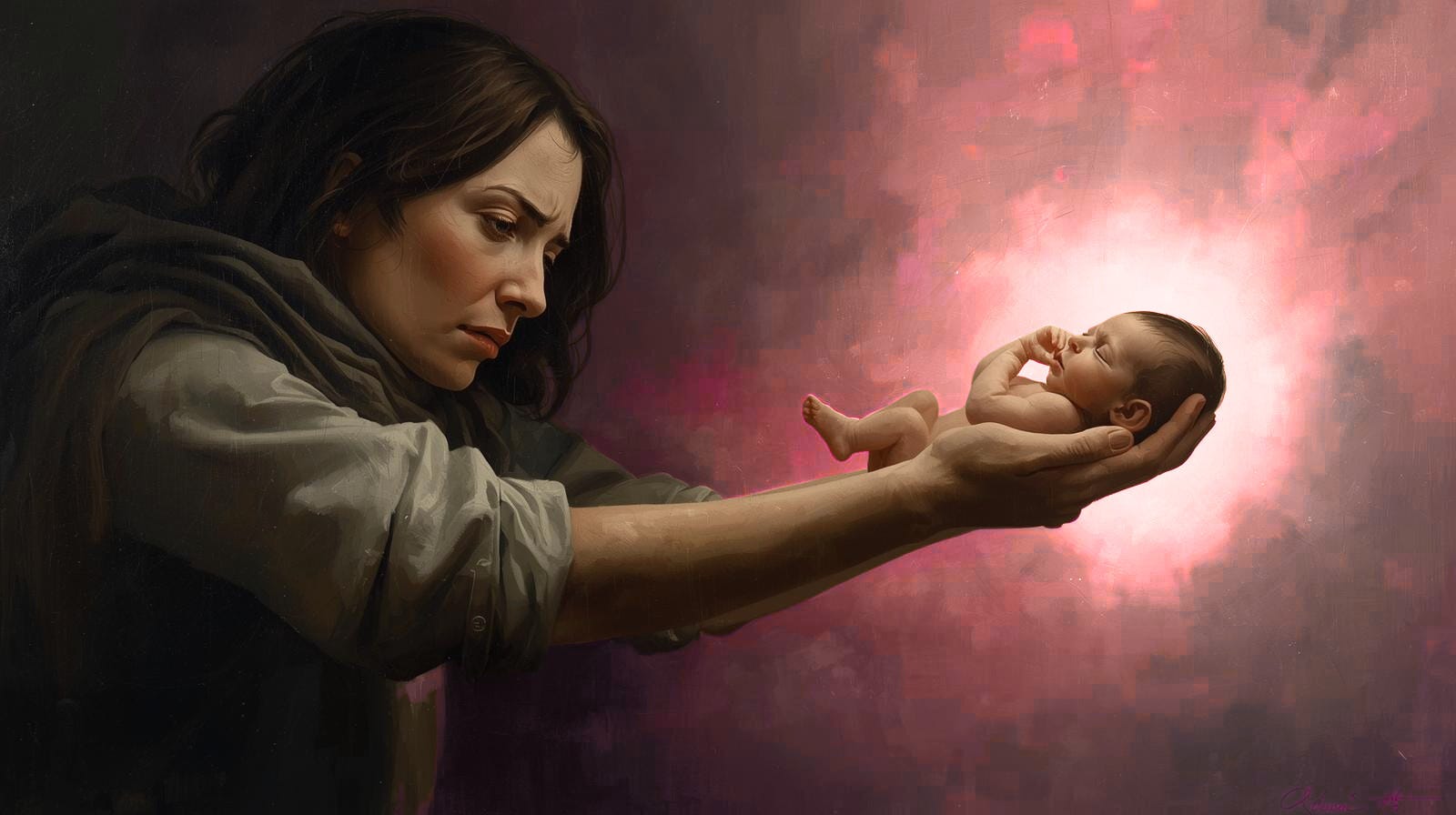
She described vomiting, sweating, and what felt like hours of relentless cramping. At one point, she passed something she could not bring herself to look at. She flushed the toilet immediately. She dared not look at that fragile life that she had so wantonly disposed of as if it were a piece of unwanted excrement.
Pangs of guilt, sadness, and despair overwhelmed her. Despite the online assurances and messages of support, she felt utterly alone. It was gone now—a life that would never be given a name.
Just when it seems that things could not grow any darker, Clause 208 has been introduced in the House of Commons. This clause would allow a woman to end the life of her unborn child up to birth without sanction or consequence. Both Christian and Islamic teachings uphold the sanctity of life and the protection of the newborn.
The Quran reminds us in Surah at-Takwir, Chapter81, The Covering Up, Verse 8–9
“And when the female infant, buried alive, is asked for what sin she was killed.”
In pre-Islamic Arabia, the killing of female infants was tragically common. Newborn girls were sometimes buried alive out of fear, shame, or poverty. Islam unequivocally condemned this practice and transformed a culture that had devalued daughters. Yet today, a culture of indifference to the sanctity of life appears to be re-emerging in a different form in the twenty-first century.
Ironically, in a society that claims to advance liberty and empowerment for women, Clause 208 risks entrenching what many would describe as a culture of death. It could result in more babies — including girls — being aborted in the very place that should be safest for them: the womb. At the same time, the emotional and psychological toll on vulnerable mothers is often overlooked. The trauma some women experience following abortion challenges the claim that abortion is a simple or liberating solution.
Islam not only prohibited female infanticide but also forbade all forms of infanticide, whether the child is male or female.
In Surah al-An’am, Chapter 6, The Cattle, Verse 151, it states:
“Kill not your children on a plea of want. We provide sustenance for you and for them… Take not life which Allah has made sacred.”
Similarly, Surah al-Isra, Chapter 17, The Children of Israel, Verse 31, reminds believers:
“And do not kill your children for fear of poverty. We provide for them and for you. Indeed, their killing is ever a great sin.”
Clause 208 represents a significant change to abortion law. Such a profound shift should not be introduced through a backbench amendment that has received limited debate in the House of Commons. The proposal would remove offences that currently make it illegal for a woman to perform her own abortion for any reason, including sex-selective abortion.
The portrayal of late-term, at-home abortion as a simple, ‘liberating’ solution ignores the profound psychological and physical gravity of the procedure. By removing the requirement for in-person clinical oversight, Clause 208 effectively strips away a woman’s final safety net. These medical appointments are not mere formalities; they are essential opportunities for healthcare professionals to identify signs of domestic abuse or coercion, ensuring a woman is not being pressured into a decision against her will. To facilitate such a life-altering event in isolation is to ignore the documented reality of long-term mental health effects, leaving the most vulnerable among us to face the shadow of depression and anxiety without a single advocate by their side.
If we believe in protecting both women and children, then we must carefully examine the implications of Clause 208. Let us speak with compassion, conviction, and clarity. Let us write to Members of Parliament, voice our concerns to the House of Commons, and support amendments that safeguard both vulnerable mothers and their unborn children.
Above all, let us pray to the Most Merciful God to forgive us for our shortcomings towards His creation and to help us to strive to uphold a culture that values life, dignity, and responsibility — one that offers genuine support to women rather than presenting abortion as the only answer.