

Introduction
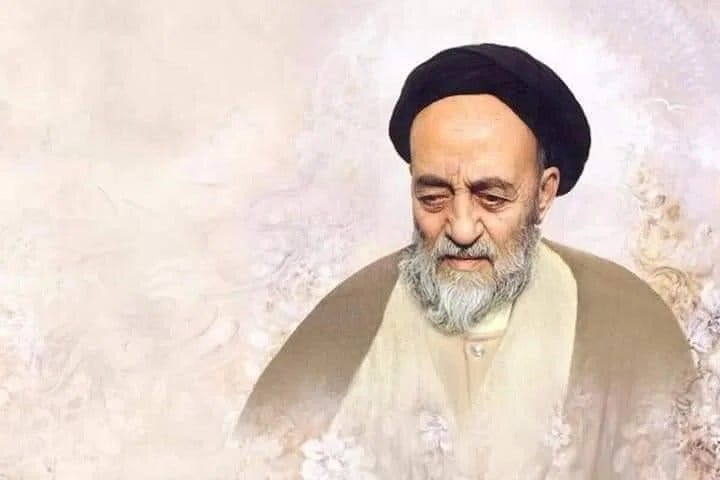
There are figures in history whose true stature only becomes apparent long after they have departed this world. Their influence, like seeds buried deep in soil, requires the passage of seasons before it breaks through the surface and bears fruit for all to see. Allameh Sayyid Muhammad Husayn Tabatabaei (may God be pleased with him) stands as a towering example of such a figure—a man whose contributions to Islamic thought, spiritual cultivation, and cultural revival were so vast that centuries may pass before their full dimensions are comprehended.
This article draws upon reflections delivered at a commemorative gathering marking the anniversary of Allameh Tabatabaei’s passing, exploring why he remained largely unrecognised in his own time and how his quiet, determined work reshaped the intellectual landscape of the Muslim world.
The Veil of Contemporaneity: Why Greatness Goes Unseen
The speaker at the memorial identified several reasons why figures of Allameh Tabatabaei’s magnitude remain obscure during their lifetimes. The first is what he termed the “veil of contemporaneity” (hijab al-mu’asarah)—the paradox that those living alongside a great soul are often the least equipped to perceive his greatness. Familiarity breeds a kind of blindness. Minor quirks or unconventional habits become magnified, while the luminous peaks of knowledge, virtue, and spiritual attainment remain hidden from those closest in time.
The second reason concerns the nature of time itself. Just as a sapling requires years before it yields fruit, the effects of a great scholar’s work may not manifest for decades. The Quranic verse beautifully captures this reality:
“Like a good tree, whose root is firmly fixed, and whose branches reach the heavens, yielding its fruit in every season by the permission of its Lord”
— (Surah Ibrahim, Chapter 14, Verse 24–25).
Only after the tree has borne its fruit do people look back and marvel at the one who planted it.
The third factor is the concealment that comes with sincerity. Many of the spiritual stations and inner qualities of such men were deliberately hidden—shared only with a handful of trusted disciples, sometimes under solemn oaths of secrecy until the master’s death. The fourth is the intangible nature of cultural work itself. Unlike political victories, whose effects are immediately visible, cultural and intellectual transformations operate through layers of mediation, their ultimate impact becoming apparent only after long intervals.
Allameh Tabatabaei possessed all four of these characteristics simultaneously. He lived in an era that could not fully appreciate him; his work required generations to ripen; his spiritual attainments were veiled by profound humility; and his primary field of endeavour—cultural and intellectual renewal—produced no immediate, tangible spectacle.
The Landscape Before His Arrival
To understand what Allameh Tabatabaei accomplished, one must first understand what he found. When he arrived at the Qom seminary, the institution was a young sapling itself—newly planted and desperately in need of a skilled, devoted gardener. The speaker, himself a student of Allameh, recalled that over ninety percent of all academic activity in the seminaries revolved around jurisprudence (fiqh) and its principles (usul). While these disciplines are essential, they represented only a fraction of what an Islamic society needs to sustain itself intellectually and spiritually.
There was no formal course in Quranic exegesis (tafsir). There was no systematic instruction in rational philosophy or theology to equip students with the tools of argumentation and critical thought. There was no structured program of ethical and spiritual training for those destined to guide communities. In essence, the pillars upon which Islam rests—the Book, the Prophetic tradition, and the intellect—were only partially represented in the curriculum.
The broader society, meanwhile, was suffocating under intellectual repression. Foreign cultural influence was steadily eroding the Islamic identity of the educated classes. Students and intellectuals were being diverted from their heritage through colonial educational frameworks. Without intervention, the speaker noted, the Islamic character of the society was condemned to dissolution.
A Threefold Revolution in Learning
Allameh Tabatabaei described his own assessment of the situation in words the speaker heard directly from his lips:
“When I came to Qom, I studied the academic condition of the seminary and reflected on the needs of the Islamic society. I found little correspondence between what was needed and what existed.”
His response was decisive. He resolved to establish three courses: a class in Islamic philosophy, a class in Quranic exegesis, and a class in ethics and spiritual development. This decision, the speaker emphasised, was comparable in courage and strategic wisdom to the political revolution later led by Imam Khomeini. Others had attempted similar reforms before and failed. Even Imam Khomeini himself had taught philosophy and mysticism four decades earlier but had been forced to discontinue those lessons due to hostile conditions. Allameh Tabatabaei was stepping into a space littered with the remnants of previous, unsuccessful attempts.
Yet he persisted. He understood the obstacles. He knew the resistance he would face. But he relied upon God alone and began.
The Man Behind the Mission
The speaker painted a vivid portrait of Allameh Tabatabaei’s material circumstances during those early years. Picture a cleric freshly arrived from a rural area, wearing a coarse, dark-blue cotton turban, living in a two-room rented house costing eighty tomans per month. He had no reception room to host visitors. When a student came to his door with a question, Allameh would step outside, place his hands on either side of the doorframe, lean his head out, and ask what was needed—never once inviting the visitor inside, not out of rudeness, but because there was simply no space.
For years, his livelihood depended on modest royalties from his writings. He carried significant debts unknown even to his closest family members, including his son-in-law, the late Ayatollah Qoddousi. When asked about accepting patronage, Allameh reportedly said he would prefer to earn three tomans a day through his own labour rather than present his needs at anyone’s door or become dependent on any household or institution.
This was the man who undertook to revolutionise Islamic culture. No wealth. No institutional backing. No public fame. Only an unshakeable trust in God and a vision of what the Ummah required.
Cultural Work as the Root of Revolution
The speaker drew a direct line between Allameh Tabatabaei’s intellectual labour and the Islamic Revolution that would later transform Iran. Every revolution, he argued, is ultimately the fruit of prior cultural preparation. The people who rose in 1979 were people who had been nourished—however partially—by Islamic thought, values, and identity. That nourishment had been cultivated over years by scholars like Allameh Tabatabaei.
The revolution required a leader of extraordinary wisdom to channel those cultural forces in the correct direction, and God granted the nation Imam Khomeini. But without the cultural groundwork, no leadership could have produced such an uprising. Likewise, the survival of any Islamic society depends not on political structures alone but on the continued growth and dissemination of its intellectual and spiritual culture.
This is why the speaker insisted that Allameh Tabatabaei’s work was not merely academic. It was an act of civilisational preservation and renewal. In a time when colonial powers sought to sever Muslim societies from their intellectual roots, he replanted those roots with patient, scholarly devotion.
The Legacy Still Unfolding
More than four decades after his passing, Allameh Tabatabaei’s influence continues to radiate outward through countless intermediaries—through the students he trained, the texts he authored, the philosophical and exegetical traditions he revived, and the spiritual ethos he embodied. His Tafsir al-Mizan remains a landmark in Quranic scholarship. His philosophical teachings produced generations of thinkers. His ethical gatherings shaped the inner lives of those fortunate enough to attend them.
Yet, as the speaker reminded his audience, what has been recognised of Allameh Tabatabaei remains a small fraction of what there is to recognise. Many of his spiritual secrets remain sealed. The full scope of his influence on contemporary Islamic thought has yet to be mapped. He belongs to that rare category of souls whose true biography will be written not by a single generation but by many.
Conclusion
In an age that rewards visibility, immediacy, and spectacle, the life of Allameh Tabatabaei stands as a profound counter-testimony. He demonstrates that the deepest transformations are often the quietest, that the most enduring revolutions begin not in streets but in classrooms, and that a single sincere soul, armed with nothing but knowledge, humility, and reliance upon God, can alter the trajectory of a civilisation.
The tree he planted continues to yield its fruit in every season. It remains for those who come after to look up at its branches, trace them back to their root, and offer gratitude for the gardener who tended them in obscurity.
This article is based on a commemorative address delivered by Ayatollah Mesbah Yazdi in honour of Allameh Sayyid Muhammad Husayn Tabatabaei (d. 1981), the renowned Quranic exegete, philosopher, and mystic of the twentieth-century Islamic world.
Powered By: Safina a part of Ilmflow
