

Take me. Take me to chant in the streets of Tehran.
Take me to rejoice in the pain of the tyrants
Take me, so I may speak to the people of Iran.
Take me to Azadi Square, the largest.
Take me to chant on revolution street
For glorifying, You bring torment to the enemy
Take me. I call upon Arab nations
Our Arab identity has been lost.
The banner of honor has been raised by Persian hands.
Take me to my tradition
Take me with my Arab identity, to whom shall I return in dignity?
My heart lives with your exile, wielding the swords of Haidar.
Take me
I extend my hand to the joy of the martyr.
I pledge for a new victory, I swear with my soul willingly
Take me, take me.
I chant with all my voice and Rumi Dance
To touch the earth with the sky of freedom,
Take me. Take me.
I call Arab nations, our Arabness has been lost.
The banner of honour has been raised by Persian hands.
Take me. Take me. By my Tradition.
Take me with my Arab identity.
To whom shall I return with dignity? My heart yearns
The blows of Haider's swords
Take me
Take me, I pledge at the shrine,
we extend our hands to Mujtaba the Glorious, take me.
To Reza, take me. To Mashhad,
Take me.
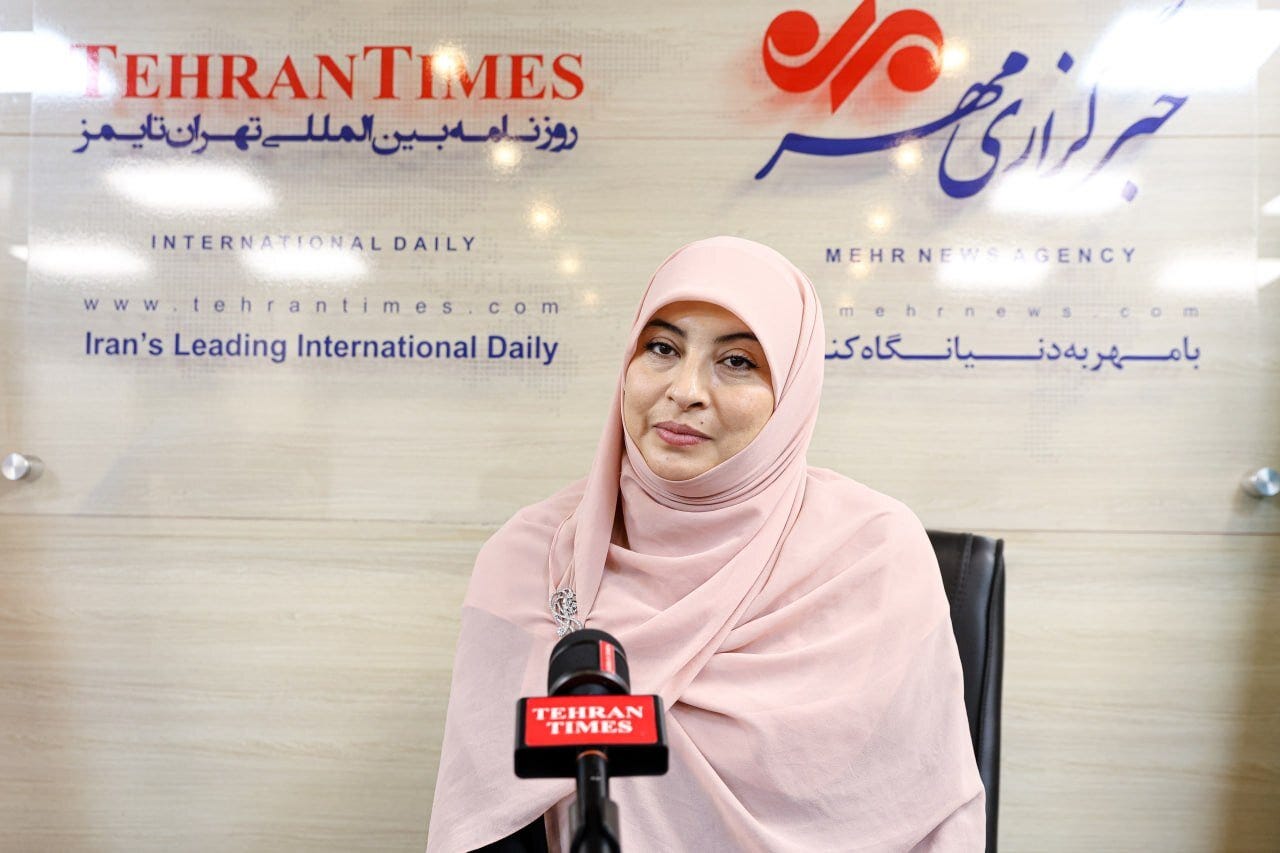
The asphalt of a city under siege is rarely seen as a canvas for the divine. Yet, for acclaimed Tunisian poet Reem Al-Wurimi, the streets of Tehran during nights of conflict transformed into something far greater than mere arteries of transit—they became open-air sanctuaries. In her deeply moving poem, Take Me to the Streets of Tehran, Al-Wurimi shifts the gaze of the world away from the harsh realities of war and toward the unbreakable, spiritual resilience of the human soul.
At the emotional core of her verses is a profound realisation of devotion. Witnessing the people of Iran spending their nights out in the open during the height of recent conflicts—especially during the holy, reflective nights of Qadr—ignited a poetic awakening within her. Instead of retreating to the safety of enclosed mosques, the people brought their prayers, their vigilance, and their faith into the very streets that were threatened. To Al-Wurimi, these roads became the most honourable grounds history had ever witnessed. Her poem whispers a striking revelation: that standing firm in the face of fear is, in itself, a pure and profound act of prayer.
Take Me to the Streets of Tehran is not just a lyrical observation; it is a spiritual migration. Through her stirring lines, Al-Wurimi navigates the complex emotional terrain of identity, willingly shedding traditional labels and sectarian divides to embrace a universal communion. She writes of passing the "Banner of Honour" with the kind of vulnerability that invites intense reflection. For her, the essence of faith transcends borders and ethnic lines, gathering humanity around a singular, divine truth. It is an impassioned plea to look past the superficial divisions of the world and connect on a deeply soulful level.
Her poetry delves into mystical realms, finding a harmonious blend of majesty and beauty within the Iranian spirit. She speaks of the nation's heritage and its spiritual guides not in the cold, detached terms of geopolitics, but as a sacred union of souls. To Al-Wurimi, this is about nurturing the believer's inner light against the encroaching darkness of a materialistic world. It is a romantic, almost ethereal homage to a culture that has preserved its rich heritage not merely through physical defence, but through art, faith, and an unshakable internal fortitude.
For Al-Wurimi, poetry is the lifeblood of truth. She views art and media as a unified force, where poetry creates the vivid, emotional internal image that the world desperately needs to see. The emotional payload of her work is, ultimately, love—love for a civilisation that refuses to be broken, love for the artists and everyday citizens who sustain a culture of resilience, and love for the undeniable beauty of a city that thrives despite external attempts to depict it in ruins.
Ultimately, Take Me to the Streets of Tehran serves as an emotional blueprint for the human spirit. It is an invitation to wander those sacred streets, to feel the pulse of a nation that turns resistance into a symphony of devotion, and to witness a profound spiritual transcendence that blossoms, beautifully and defiantly, beneath the open sky.


